


What Every Driver Should Keep in Their Car for Road Trips in Spain


Travelling by car allows you to see much more than the usual tourist routes between major cities. You can visit small coastal villages, explore mountain roads, stop at natural landmarks or change your plans to discover an interesting place you come across along the way. However, even a well-planned trip is not immune to unexpected problems such as a flat tyre, a dead battery or a sudden change in the weather.
To prevent an unexpected situation from turning into a serious problem, it is worth making sure your car is properly equipped before setting off. Some items are required under Spanish traffic regulations, while others can help you deal with minor breakdowns yourself or make an enforced stop more comfortable. Here is what you should keep in your car before travelling.
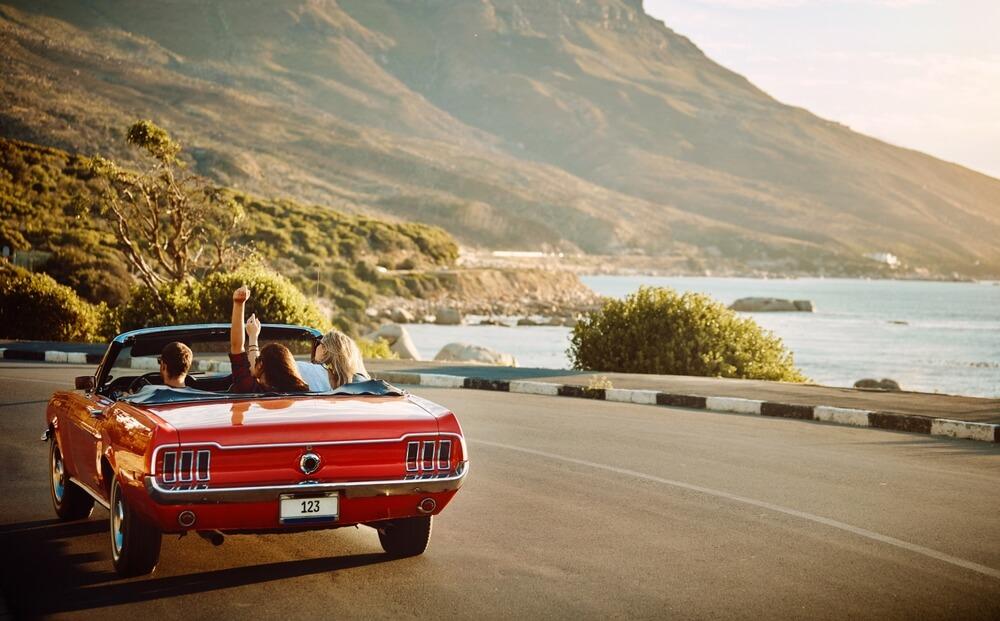
Spanish regulations specify a list of equipment that passenger cars must carry. It is important to note that some changes to these requirements came into effect in 2026.
The most significant change is the requirement to use a V16 emergency beacon instead of traditional warning triangles. Since 1 January 2026, vehicles registered in Spain must carry a V16 beacon connected to the DGT system. This is a small yellow flashing light that emits a 360-degree signal and transmits the location of a vehicle stopped due to a breakdown or accident.
The device must be kept inside the passenger compartment, for example, in the glove compartment, so the driver can reach it without leaving the vehicle. In the event of a breakdown, the beacon should be switched on and placed on the highest accessible part of the car, usually the roof. Its magnetic base keeps it securely attached to the metal surface. This allows other drivers to be warned of the hazard without putting yourself at risk by having to place a warning triangle on the road.
When buying a V16 beacon, make sure it has official approval and appears on the DGT's list of certified models. An ordinary flashing light or an older standalone beacon without connectivity does not meet the new requirements. Under the new regulations, warning triangles are no longer a legally accepted way of signalling a stationary vehicle for cars registered in Spain.
There is an exception for vehicles registered in other countries that are temporarily driving in Spain as part of international road traffic. These vehicles may use warning triangles in accordance with international road traffic conventions. This is an important detail for tourists arriving in their own cars from other European countries.
Another compulsory item is a high-visibility reflective vest. It must be worn whenever the driver leaves the vehicle and is on the carriageway or hard shoulder of a road outside a built-up area. The vest must be certified and stored inside the passenger compartment rather than in the boot. Otherwise, if you need to get out of the car, you risk finding yourself on the road without adequate protection.
The car must also have a spare wheel, either full-size or temporary, together with the tools needed to change it. Alternatively, it can be equipped with a system that allows you to repair tyre damage and continue driving safely. One example is a tyre repair kit containing a compressor and sealant. The specific option depends on the vehicle's design, so check the manufacturer's recommendations before travelling.
What documents should you carry?
Before setting off, it is worth checking not only your car's technical condition but also its paperwork. Drivers must carry three main documents: a driving licence, the vehicle registration certificate and the vehicle's technical inspection card (Tarjeta de Inspección Técnica del Vehículo, or tarjeta ITV).
All documents must be valid. For vehicles that are subject to mandatory technical inspections, it is also important to make sure the ITV is up to date. Proof of inspection is provided by the relevant entry in the documents and the sticker on the windscreen.
Some documents can be stored in digital format. The official miDGT app allows drivers to use digital versions of their driving licence and vehicle registration certificate, which are legally valid in Spain. However, if you are travelling abroad, it is worth checking the destination country's requirements and carrying physical documents as well.
You are no longer required to carry your insurance policy or proof of payment of the latest premium in the car, as Spanish authorities can check insurance details in electronic databases. Nevertheless, it is useful to have your policy number, your insurer's contact details and information about roadside assistance readily available. If you are driving a hire car, you should also keep the rental agreement and the company's contact details.
A small kit for minor repairs
Even if your car is regularly serviced, minor problems can still arise during a journey. A small toolkit can come in handy in these situations.
First of all, it is worth carrying a tyre inflator and a pressure gauge to check tyre pressure. A slow loss of pressure is not always immediately noticeable, but it can affect the car's handling and increase fuel consumption. Checking your tyres is particularly important before long motorway journeys.
Work gloves, a torch, a set of screwdrivers, a pair of combination pliers and electrical tape are also useful. There is no need to carry a full mechanic's toolkit: a few basic tools for simple tasks you know how to perform yourself will be enough.
It is also worth keeping a set of jump leads or a portable jump starter for the battery. A flat battery can become a problem after the car has been parked for a long time, especially in winter or in vehicles that are not used regularly. A compact car battery charger can help keep the battery charged when suitable conditions are available.
At the same time, avoid attempting to repair serious faults yourself on the hard shoulder. If the car cannot continue safely, it is better to call a roadside assistance service.
What to keep in your car in case of a prolonged stop
Not every problem requires a repair. Sometimes you may have to wait for a tow truck, assistance from your insurance company or roadworks to finish. In Spain's hot climate, even an ordinary wait can become uncomfortable, so it is worth keeping a small supply of essential items in your car.
The first is drinking water. A few bottles in the boot can be useful during traffic jams, lengthy diversions or forced stops far from populated areas. In summer, water should be replaced regularly. For longer journeys, it is better to use a cool bag or insulated container to prevent drinks from getting too warm.
It is also worth packing energy bars, nuts, dried fruit or other snacks that do not need refrigeration. They can come in handy if your journey takes longer than expected or the nearest petrol station is a long way off.
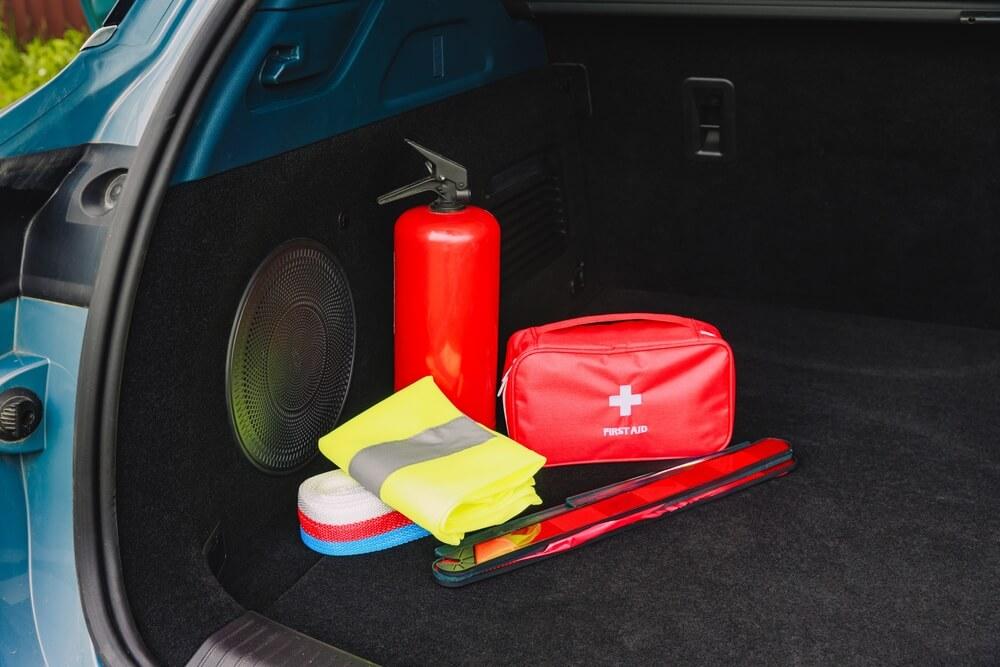
A compact first aid kit containing plasters, sterile wipes, bandages, antiseptic and disposable gloves can help you deal with minor injuries. In Spain, first aid kits are not compulsory equipment for private passenger cars, but carrying one is certainly a sensible precaution. If you are travelling with children or people who take regular medication, make sure you also bring any personal medical supplies they may need.
Another useful item is a thermal blanket. It takes up very little space but can be helpful if you have to stop overnight or in cold weather, especially if you need to leave the vehicle.
Do not forget a phone charger and a power bank. Your phone is essential not only for navigation but also for calling for help, contacting your insurance company and checking traffic updates. If you are travelling through sparsely populated areas, it is useful to download offline maps in advance, as mobile coverage is not available everywhere.
Additional equipment for travelling in different parts of Spain
Spain's climate varies considerably depending on the region and time of year. That is why the items you keep in your car should be adapted to your route.
In summer, especially when travelling through Andalusia, Murcia or inland areas of the Valencian Community, it is important to carry enough water, sunglasses and lightweight clothing. A windscreen sunshade can help reduce the temperature inside the car when it is parked. You should also avoid leaving electronic devices, medication and heat-sensitive food inside the car in direct sunlight.
Winter calls for different preparations. Mountainous areas such as the Pyrenees, Sierra Nevada and other high-altitude regions can experience snowfall and icy roads. For these journeys, it is worth carrying snow chains compatible with your vehicle or textile snow socks. They are not compulsory permanent equipment for every car, but their use may be required by road signs or police instructions on certain stretches. Before heading into the mountains, check the weather forecast and road conditions.
If you are travelling in rainy weather, it is useful to carry spare windscreen washer fluid, a glass-cleaning product and a small microfibre cloth. Good visibility is particularly important on winding roads and when driving in heavy rain.
If you are planning to travel with pets, you should arrange a suitable restraint system in advance. Dogs must be transported using special seat-belt harnesses, carriers or vehicle barriers that prevent them from moving freely around the passenger compartment and distracting the driver. For longer journeys, it is also worth bringing water, a bowl and some familiar items for your pet.
What is not compulsory but may come in handy
Drivers often confuse useful equipment with items that are explicitly required by law. For example, first aid kits, fire extinguishers, spare bulbs, additional fuses and special tyre repair sprays are not part of the mandatory equipment for an ordinary private passenger car. However, some of these items can be useful depending on the vehicle's design and the type of journeys you take.
A small fire extinguisher can provide an additional safety measure, especially if you frequently use your car for long-distance travel. Just make sure to check its expiry date and condition.
You can also keep a foldable shopping bag, paper tissues, wet wipes, an umbrella and a spare change of clothes in the boot. These are not emergency items, but such small essentials often prove useful on road trips.
If you use your car to transport bicycles, sports equipment or luggage on the roof, it is worth carrying additional securing straps and checking them before every journey. An improperly secured load can pose a danger to everyone on the road.
Even the best equipment cannot replace a proper vehicle inspection. Before a long journey, check the tyre pressure and condition, engine oil level, coolant and brake fluid levels, as well as the operation of the headlights, indicators and windscreen wipers.
Pay particular attention to the brakes and battery. If your car has not been serviced for a long time or is showing signs of a fault, it is better to visit a garage before setting off rather than rely on being able to fix the problem on the road.
Also, make sure you have the roadside assistance number provided by your insurance policy readily available. In the event of a breakdown or accident, you can call 112 to report an emergency requiring immediate assistance.
It is equally important to store everything properly. The V16 beacon and reflective vest must be accessible from inside the passenger compartment, while heavy items should be securely fastened in the boot. Avoid packing things in a way that could allow them to move around during sudden braking or obstruct your view through the rear window.
Preparing your car does not require a large investment or turning your boot into a mobile workshop. All you need is the mandatory equipment, a basic kit for unexpected situations and items suited to the season and your route. That way, even an unplanned stop will be less stressful, and your road trip around Spain can remain an enjoyable part of your holiday.


ABOUT Torodoro
FOR BUSINESS
FIND US ON SOCIAL

