


Caves in Valencia You Can Visit During the Colder Months


The underground world of Valencia Province is far more diverse than it might seem at first glance. It includes caves with thousand-year-old stalactites, former medieval wine cellars, archaeological sites linked to Neanderthal life, and rock shelters containing prehistoric paintings dating back thousands of years.
Some of these places are equipped for tourist visits, while others can only be explored on guided tours. Some are located along natural trails that are particularly interesting after the autumn rains. This makes exploring the caves a great option not only for summer holidays but also for autumn and winter weekends.
Cueva de Don Juan: Underground Chambers Among the Mountains of Jalance
Near the municipality of Jalance, in the mountainous area of the Valle de Cofrentes-Ayora, lies one of the best-known tourist caves in the province: Cueva de Don Juan.
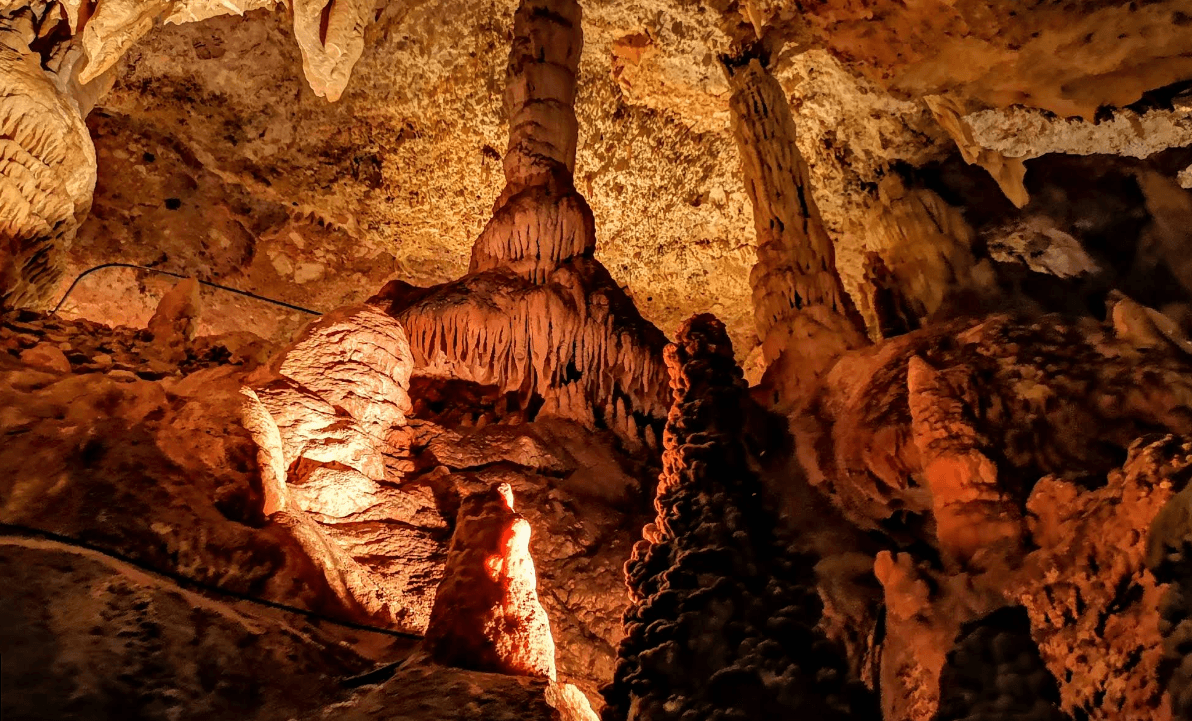
Its underground chambers were formed through long geological processes. Inside, visitors can see stalactites, stalagmites, stone columns and other karst formations. The cave has both dry and wet sections, with a total volume of approximately 60,000 cubic metres.
The site is interesting not only for its geology. Archaeological discoveries indicate that people used the cave as a shelter as far back as prehistoric times. Traces of human presence have been found here, including artefacts dating from the Mesolithic period and the Bronze Age.
A circular route of approximately 500 metres has been prepared for visitors. The guided tour lasts around 30-45 minutes. Lighting and purpose-built walkways allow visitors to admire the natural formations without any specialised caving equipment.
As of November 2026, the cave is open on weekends and public holidays. Visitors should check the current tour schedule before travelling. Tours generally take place between 10:00 and 13:45, and visitors are advised to arrive approximately 15 minutes before the start.
There is also an important restriction during the autumn and winter season: the cave closes whenever an orange or red weather warning is issued. It is therefore worth checking not only the opening hours but also the weather alerts before setting off.
A visit to Cueva de Don Juan can be combined with a walk around Jalance, a visit to its medieval castle and an opportunity to enjoy the mountain scenery of the Júcar River valley.
Cuevas de la Araña: Prehistoric Art in Bicorp
In the municipality of Bicorp, among the wooded slopes of the Cazuma natural area, lies one of the province's most valuable archaeological sites: Cuevas de la Araña.
Despite their name, these are not caves with large underground chambers but rock shelters whose walls preserve prehistoric paintings. The best-known composition depicts a person collecting honey from a wild beehive. This scene is considered one of the most recognisable examples of Levantine rock art. The paintings also feature animals, hunting scenes and human figures. The site is part of the Rock Art of the Mediterranean Basin on the Iberian Peninsula, which is included on the UNESCO World Heritage List.
Independent access to the rock shelters is not permitted: visits are organised by the Ecomuseo de Bicorp. The guided programme includes a visit to the museum, a walk along a botanical trail, a stop at the Chorrador de la Rebolla viewpoint and an opportunity to see the rock paintings.
The entire visit takes approximately three hours. The route is of moderate difficulty and involves walking around 300 metres along dirt tracks and a mountain trail.
Visits are available throughout the year, generally from Wednesday to Sunday, with tours starting at 10:30. However, weather conditions are particularly important during the colder months, as the organisers may cancel tours in the event of bad weather. Comfortable footwear with non-slip soles and clothing that protects against wind and rain are recommended.
Cuevas de la Villa: The Underground History of Winemaking in Requena
Not all caves in Valencia Province are natural formations. In the old town of Requena, beneath the historic La Villa district, lies an entire underground complex known as Cuevas de la Villa, which was used for various practical purposes over several centuries.
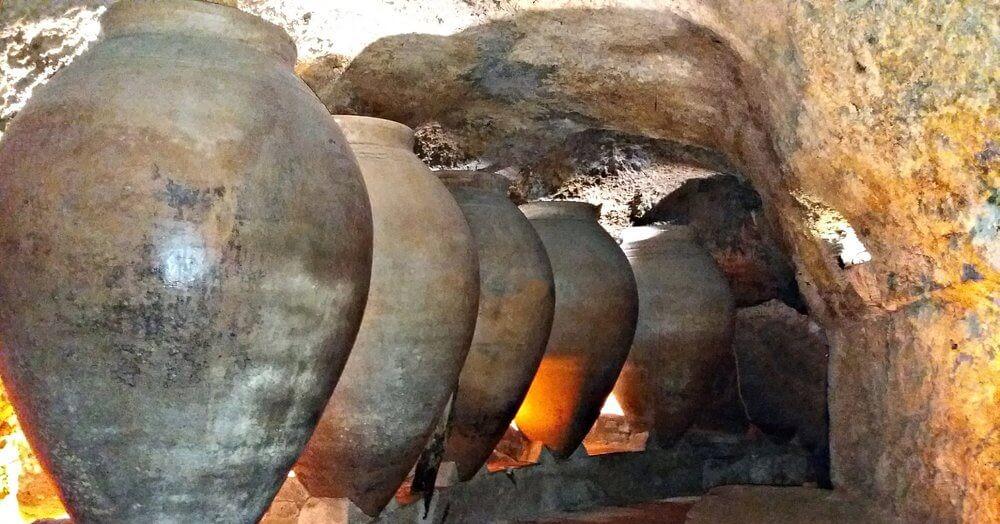
The caves were carved into soft rock during the Muslim period. Initially, they served as living quarters, grain storage facilities and shelters. Some were also used as ossuaries, places where human bones were kept after burial. Over time, however, the complex became primarily associated with wine production and storage.
Today, the tourist route includes 22 interconnected caves covering a total area of approximately 1,200 square metres. Inside, visitors can see ancient wine storage vessels, equipment from traditional wineries and other evidence of the area's winemaking heritage.
This is a particularly interesting destination for anyone who wants to better understand the history of the Utiel-Requena wine region. The tour reveals how local residents adapted underground spaces for food storage and wine production long before modern wineries appeared.
Unlike natural caves, Cuevas de la Villa are particularly convenient to visit during the colder months. The complex is located underground, has a purpose-built tourist route and is not affected by rainfall in the same way as mountain trails.
Visits are available from Tuesday to Sunday. During the winter season, the usual opening hours are 10:30-14:00 and 16:00-19:00. After exploring the caves, visitors can stroll through the historic La Villa district, discover its medieval streets and continue exploring the city's wine culture at local museums or enjoy a tasting at one of the area's wineries.
Cova del Bolomor: Traces of Palaeolithic Human Life in Tavernes de la Valldigna
Near Tavernes de la Valldigna lies Cova del Bolomor, one of the most important archaeological sites in the western Mediterranean.
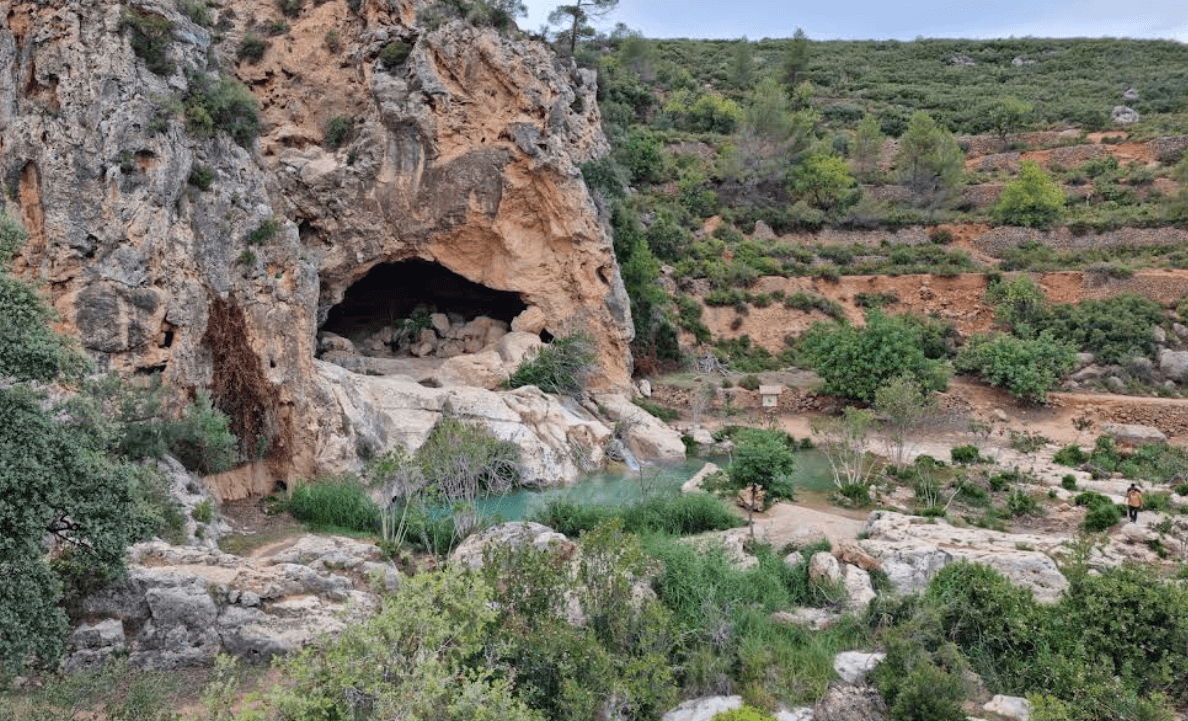
This natural rock shelter contains evidence of human presence dating back more than 350,000 years. The discoveries allow researchers to investigate the lives of ancient human communities, their tools, diet and interaction with the surrounding environment.
The remains of ancient hearths are particularly significant. Research indicates that the inhabitants of this site were using controlled fire more than 230,000 years ago. This makes Bolomor an important location for studying the early history of human fire use in Europe.
Visits to the archaeological site are organised with a guide. During the tour, visitors can explore the excavation area, see the layers of soil that preserve evidence of ancient life and learn about the discoveries made by researchers.
It is important to note that Cova del Bolomor is not a tourist cave equipped with underground chambers. It is an open-air archaeological site, so visiting conditions depend on organised tours and the state of the surrounding area.
A visit can be combined with the Cova del Bolomor hiking route, which passes through the Barranc del Bolomor natural area and offers views across the Valldigna valley.
Cueva de las Palomas: A Nature Trail in Yátova
For those more interested in natural landscapes than underground tours, Cueva de las Palomas in the municipality of Yátova is worth considering.
The cave is located in the valley of the Río Juanes, among rocky formations, natural pools and characteristic Mediterranean vegetation. Over time, water has shaped the local landscape, creating interesting geological formations.
The SL-CV 163 hiking trail leads to the cave. It is a circular route approximately 8.5 kilometres long, with an elevation gain of around 200 metres. According to the calculations of the Valencian Community Mountain Sports Federation, completing the route takes approximately 2 hours and 35 minutes.
The trail starts near Parque de San Vicente in Yátova and passes by the Río Juanes, natural pools, old agricultural structures and several viewpoints. It is a good option for anyone looking to spend a few hours outdoors and explore the inland areas of the province.
However, there is an important detail to bear in mind: in June 2026, Yátova Town Council introduced access restrictions to the Cueva de las Palomas natural area. The road leading to the site was closed to the general public, with access retained only for local residents and property owners in the area.
Therefore, when planning a walk, it is important not to rely solely on the fact that the route still appears in tourist guides. Visitors should check whether the restrictions have been lifted and whether access to the natural area is permitted on their planned travel date.
November and the following winter months are no obstacle to exploring the underground heritage of Valencia Province. In fact, this period has its own advantages: many sites receive fewer visitors, while underground spaces with relatively stable temperatures remain accessible regardless of the summer heat.
Cueva de Don Juan and Cuevas de la Villa are particularly convenient options for trips during the colder months. The former operates according to a weekend and public holiday schedule, while the latter maintains regular tourist opening hours throughout the year. Both sites are equipped for visitors and do not require any special level of physical fitness.
Cuevas de la Araña and Cova del Bolomor can also be included in autumn and winter plans, but guided tours need to be booked in advance. Weather conditions are important at both sites, as part of each route takes place outdoors.
The situation is different when it comes to nature trails. After rainfall, mountain paths can become slippery, while water levels in rivers and natural pools may rise. Before setting off, visitors should check weather warnings, trail conditions and any possible access restrictions. Waterfalls and rocky gorges should be avoided during periods of heavy rain and immediately afterwards.
It is also worth remembering that some popular natural attractions may be temporarily closed. For example, Cueva del Turche in Buñol remains inaccessible to visitors due to restoration work following the 2024 DANA floods. According to the latest information, access restrictions are expected to remain in place until at least April 2027. Visitors must not attempt to enter closed areas.
For these trips, it is advisable to wear closed shoes with non-slip soles, bring a waterproof jacket and carry enough water. In natural areas, it is also important to account for the shorter daylight hours and plan to return before dark.
Valencia Province offers different ways to explore its underground heritage, from a short guided tour among stalactites to a several-hour walk through archaeological sites. It is a wonderful opportunity to discover the inland areas of the region, which often remain overlooked even by people who have lived on the Mediterranean coast for many years.


ABOUT Torodoro
FOR BUSINESS
FIND US ON SOCIAL

