


Castles, Queens and Miracles: The Legends Hidden in Valencia


Valencia Province is home to many places whose stories go beyond documented historical facts. Behind ancient fortresses lie tales of clever tricks used during military sieges, mountain ruins evoke mysterious queens, and small chapels preserve accounts of extraordinary events passed down by local residents for generations. Some of these stories have a historical basis, while others belong to local folklore, but all of them offer a deeper understanding of the province's history and cultural traditions.

Olocau: The Cid's Clever Trick During the Capture of the Castle
In the small municipality of Olocau, located in the Camp de Túria comarca, the remains of a medieval castle are linked to one of the region's most intriguing military legends. It tells the story of Rodrigo Díaz de Vivar, better known as El Cid Campeador.
According to local tradition, when attempting to capture the fortress, El Cid decided to rely on psychological tactics rather than numerical superiority. One night, his men gathered a large herd of goats and attached lit candles to their horns. They then drove the animals along the mountain slope towards the castle. Seeing countless lights, hearing the noise and noticing movement on the hillsides, the defenders supposedly believed that a huge army was approaching. Fearing an attack, they surrendered. There is no documentary evidence confirming that this trick actually took place, but the story has become part of the local historical memory and traditions associated with El Cid.
Today, visitors come here to explore the castle ruins and enjoy the spectacular views of the surrounding mountains. A trip to Olocau can also be combined with a walk through the natural landscapes of the Sierra Calderona.
Cullera: The Castle Said to Be Protected by Supernatural Forces
Castillo de Cullera stands on a hill overlooking the town and is one of the most prominent historical landmarks along the coast. The fortress is of Arab origin and was built around the 10th century. Throughout its history, it has witnessed numerous military conflicts, reconstructions and changes of power.
Its history is linked to a tale about an unsuccessful attempt by James I to capture the castle during the conquest of the Kingdom of Valencia. According to legend, the king ordered his troops to bombard the fortress with stones launched from catapults, but the projectiles could never reach the required height. The army was unable to continue the attack and eventually had to abandon the siege. Local tradition attributes this failure to the intervention of supernatural forces. Some stories claim that invisible forces hid the stones suitable for the bombardment, while others maintain that an angel protected the castle by spreading its wings over it.
As a result, the fortress gained a reputation as a place that could not be conquered through conventional military means. The historical circumstances of the siege and the legendary explanations for its failure should be considered separately, but their combination is precisely what made this story part of the local heritage.
The castle and its defensive walls can still be visited today. It houses the Municipal Museum of History and Archaeology, while the elevated position offers views of the town, the coastline and the Mediterranean Sea. It is one of those places where the architecture itself helps visitors imagine the circumstances in which such legends originated.
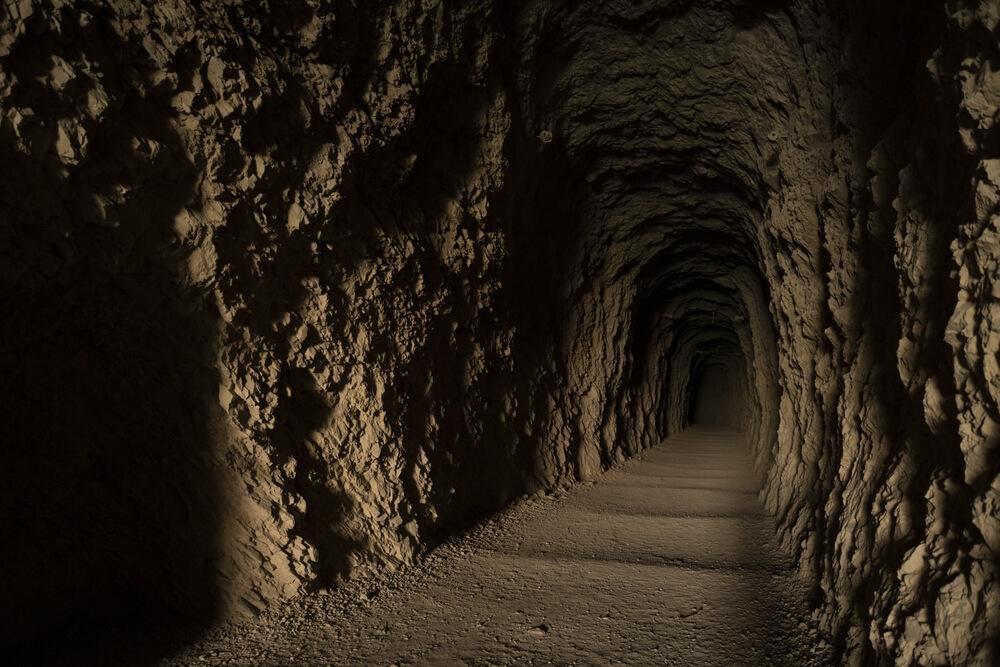
Quesa: A Secret Underground Escape Route from the Castle
In the municipality of Quesa, located in the Canal de Navarrés comarca, the remains of an old fortress are associated with a story about a mysterious underground passage.
According to local legend, during a siege, the castle's inhabitants managed to escape through a secret passage leading beyond the fortifications. It supposedly allowed them to leave the fortress without being noticed by the attackers and provided an escape route even when all the usual exits were blocked.
This story might have remained an ordinary local legend if ground collapses had not occurred beneath residential buildings in the town itself. Underground galleries were discovered during some of these incidents. Their existence provided further grounds for speculation about old tunnels and possible connections between different parts of the settlement. Although the presence of underground cavities does not in itself prove that the legendary escape route from the castle existed, the actual underground structures and the story associated with them in local tradition seem to echo one another.
Quesa is interesting for more than just this legend. The surrounding area is known for its natural landscapes, mountain trails and bodies of water. A trip here can become a short journey through the inland areas of the province, far from the busy Mediterranean coastline.
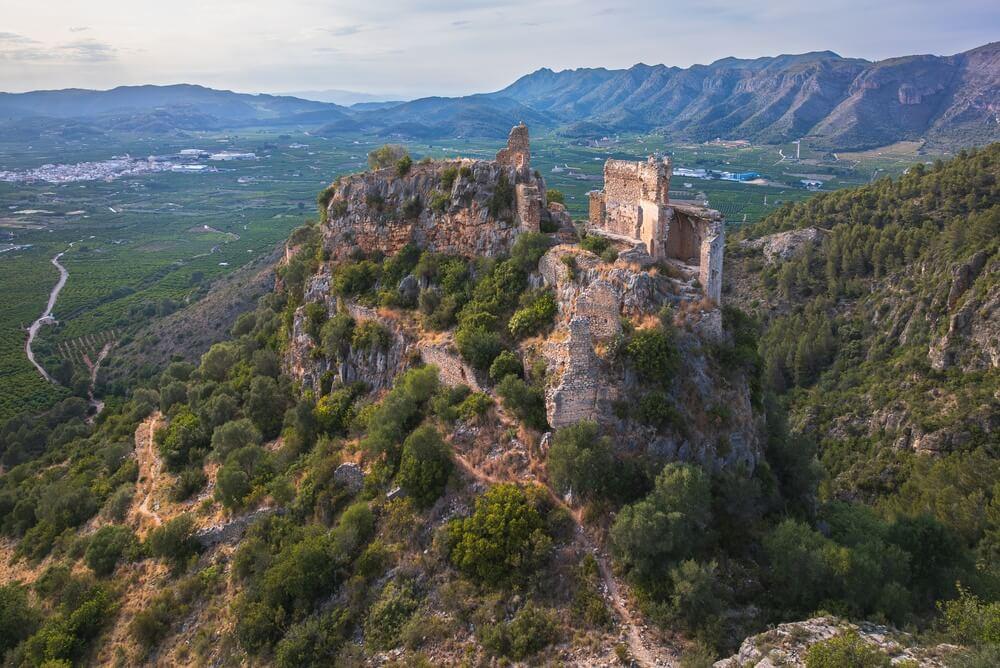
Marinyén Castle: The Legend of the Moorish Queen
The ruins of Castell de Marinyén, also known as Castillo de la Reina Mora, are located within the municipality of Benifairó de la Valldigna, surrounded by a mountainous landscape.
According to local legend, when the Christian army advanced towards the fortress, a Muslim queen found herself facing the threat of capture. Realising that the castle could not be defended and that the defenders were about to surrender to the attackers, she decided not to fall into enemy hands. The queen climbed to a window in one of the towers and threw herself from the cliff along with her young son. The woman died, but according to the legend, the child survived the fall.
The story continued in local folklore, with tales claiming that a baby's cries can sometimes be heard near the ruins at night. One of the castle's windows is still associated with the spot from which the queen supposedly jumped. There is no historical evidence confirming that the event actually took place, but the legend has become an inseparable part of local memory.
The castle stands on a rocky hilltop surrounded by deep ravines. Even without the legend, the location attracts attention for its setting and panoramic views of the Valldigna Valley. However, it is worth remembering that these are ruins rather than a developed tourist attraction. Before setting out, visitors should check whether the route is accessible and what condition the paths are in.
Alboraya: The Miracle of the Three Fish and the Lost Communion Wafers
In Alboraya, near Valencia, the memory of one of the best-known religious legends in this part of the region is still preserved: the Miracle dels Peixets, or the Miracle of the Little Fish.
The story dates back to 1348. According to tradition, a priest was carrying consecrated communion wafers across the Carraixet ravine when a sudden flood caused him to lose the sacred elements in the water. The man was unable to find them and believed they had disappeared forever.
However, according to the legend, three fish later emerged from the water. Each carried a communion wafer in its mouth and returned it to the priest. The event was regarded as a miracle, and the site became an object of special religious devotion. In memory of the story, a small chapel called Ermita dels Peixets was built near the coast of Alboraya. Its location close to the sea and the mouth of the watercourse makes it a recognisable landmark among the area's religious sites.
Interestingly, the story did not remain confined to church tradition. It is also depicted on ceramic panels that can be seen in Alboraya and neighbouring Almàssera. They show three fish carrying communion wafers, making the legend part of the everyday urban landscape.
Alzira: The Place Where James I Is Said to Have Died
Another story is associated with the town of Alzira, located on the banks of the Júcar River. Here, visitors can see the Cruz Cubierta de Alzira, a covered wayside cross that local tradition links to the final days of King James I the Conqueror.
According to the legend, it was at this very spot that the king, who was travelling towards Valencia, lost consciousness due to a serious illness or an injury and died shortly afterwards. The story became widely known, and for centuries the cross remained a symbolic reminder of the event.
James I died in 1276, leaving a significant mark on the history of the Kingdom of Valencia. His name is associated with numerous towns and landmarks across the region, while local legends often add details passed down through generations to the documented historical record.
Today, Cruz Cubierta remains one of Alzira's historical landmarks. Interestingly, the structure now stands amid modern road infrastructure, clearly illustrating how much the urban landscape has changed over the centuries, while old symbols continue to hold their place within it.
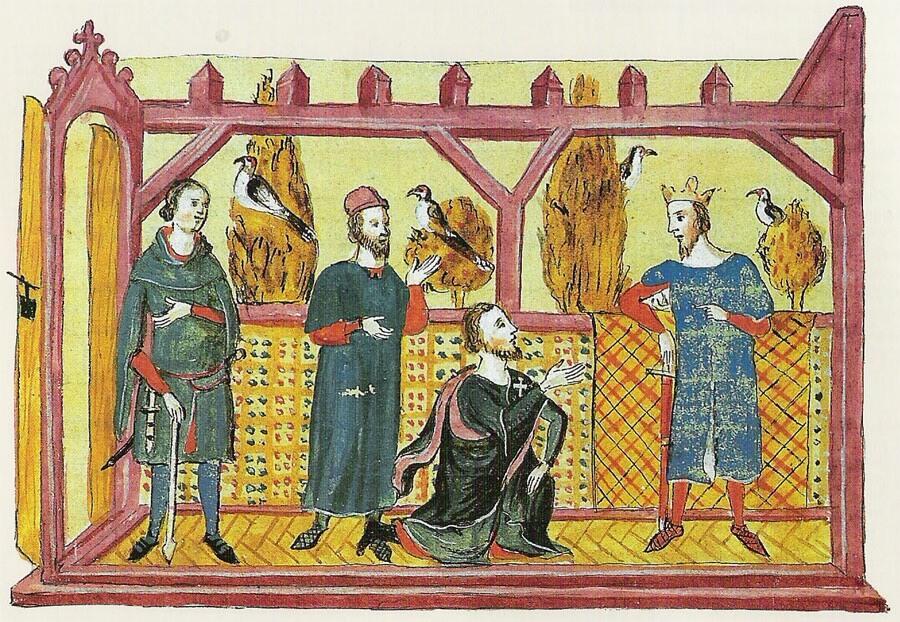
The legends of Valencia Province do not always involve supernatural events. They often emerged around real historical occurrences, unusual architectural structures or places whose significance gradually changed over time. As a result, a fortress could gain a reputation for being impregnable, an old underground passage could become part of a story about escape, and a small chapel could preserve the memory of a miracle.
These places are worth visiting for more than just their legends. They offer an opportunity to discover lesser-known aspects of the region and explore small towns and villages that reveal the authentic beauty of Spain.
When planning such trips, it is worth remembering that not all these locations are fully developed tourist attractions. Some castles survive only as ruins, while certain landmarks can only be reached via mountain trails. It is therefore best to check route accessibility before setting off, especially when visiting remote fortresses and natural areas.


ABOUT Torodoro
FOR BUSINESS
FIND US ON SOCIAL

