


Albarracín, the Medieval Town That Time Forgot


In the province of Teruel, amid the mountainous landscapes of Aragón, lies a town that seems to emerge straight from the rocks. Its reddish houses with wooden beams, narrow streets, stone stairways and remains of ancient fortifications form such a harmonious architectural ensemble that it is hard to believe people still go about their everyday lives here. This is Albarracín, one of Aragón’s most distinctive historic towns, which has preserved the unique atmosphere of a medieval settlement.
Its unmistakable silhouette has long been one of the most recognisable images of Teruel province. Yet behind its picturesque façades lies much more than a beautiful collection of historic buildings. Albarracín has a complex history linked to the Muslim period of the Iberian Peninsula, the Christian Reconquista and the development of an independent feudal lordship. Its surroundings also preserve evidence of human presence dating back to prehistoric times.
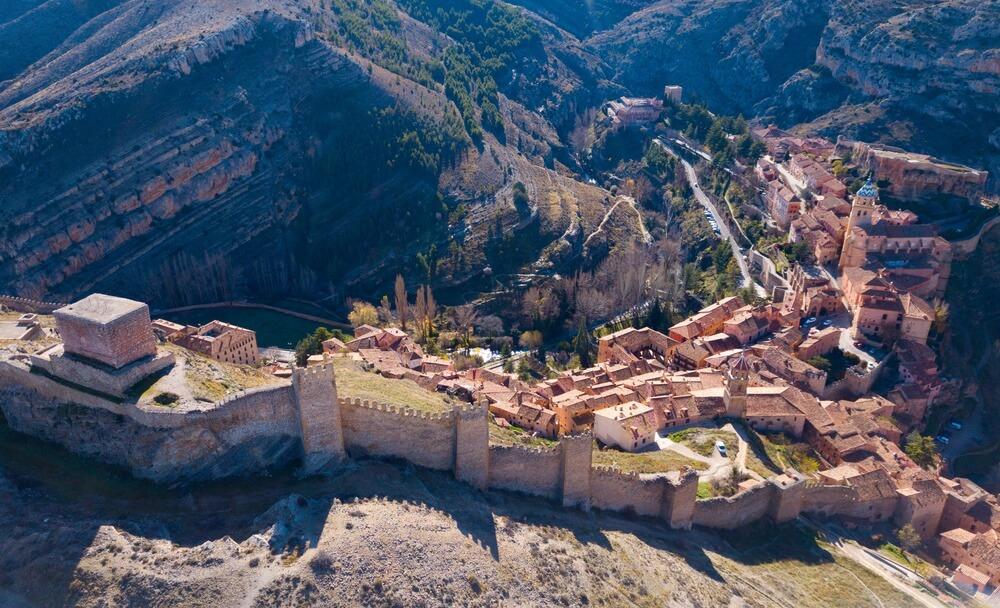
Albarracín stands on a rocky outcrop surrounded by the Guadalaviar River. The natural curve of the river created a kind of defensive barrier, while the steep slopes determined how the settlement developed. As a result, the town's streets follow the contours of the hillside, climb through stairways, pass along narrow passageways and unexpectedly open onto small squares.
The town's history is particularly closely linked to the Muslim period. During the Middle Ages, Albarracín became the centre of an independent taifa, a small Muslim state that emerged following the collapse of the Caliphate of Córdoba. In the 11th century, the Banu Razín dynasty ruled here, and according to the most widely accepted theory, its name gave rise to the town's present-day name.
Later, the territory came under the control of Christian feudal lords. For several centuries, Albarracín retained a distinctive political status, passing between different rulers before finally becoming part of the Kingdom of Aragón. This history left a visible mark on the town's architecture, defensive structures and cultural heritage.
Today, Albarracín's historic centre is designated a Site of Cultural Interest in Spain. Its value lies not in individual monuments but in the remarkably well-preserved urban environment, where traditional houses, religious buildings, fortifications and the natural landscape come together as a unified whole.
Red façades and unmistakable architecture
One of the first things to catch the eye in Albarracín is the distinctive reddish colour of its houses. This comes from the use of local building materials, particularly red gypsum, as well as traditional construction techniques involving wooden frames and infilled walls.
The façades have irregular outlines, and the upper floors often project over the narrow streets. Wooden balconies, wrought-iron railings, small windows with lace curtains and massive doors create the characteristic appearance of local buildings. Some houses stand so close together that their eaves almost touch.
It is particularly interesting to look out for these details while exploring the streets that branch away from the main tourist routes. Here, you can spot antique door knockers, decorative wrought-iron features, traditional wooden structures and small inner courtyards. Many of these architectural features have entirely practical origins: compact construction made better use of the limited space on the hillside and helped protect homes from the weather.
Among the best-known buildings is Casa de la Julianeta, located beside the Portal de Molina gateway. Its unusual shape, uneven walls and wooden structures have made it one of Albarracín's most recognisable landmarks. The house seems to adapt to every available centimetre of space, illustrating the distinctive features of traditional local construction.
The houses of noble families are equally interesting, particularly Casa de los Monterde and Casa de los Navarro de Arzuriaga. They are reminders of a time when the town was an important administrative and commercial centre for the region, and wealthy families sought to display their social standing through the architecture of their residences.
Town walls and traces of medieval defences
Rising above the residential buildings is a system of fortifications that ranks among Albarracín's most important historical landmarks. Its construction took place in several stages, beginning during the Muslim period.
The oldest defensive structures date back to the 10th century. These include various fortification elements and Torre del Andador, a tower that holds a special place in the town's defensive history. In the 11th century, the fortifications were expanded to cover new parts of the settlement. After Albarracín came under Christian rule, additional sections of walls, towers and defensive structures were built.
Today, the remains of the fortifications stretch along the slopes of the hill, following its natural contours. Their silhouette is particularly striking from a distance, when the walls appear to merge with the rocky landscape.
Walking along the walls offers a better understanding of why this location became such an important defensive stronghold. From higher up, visitors can enjoy views of the red rooftops, the Guadalaviar Valley and the surrounding mountains. It also becomes clear just how closely the historic townscape is connected to the natural terrain.
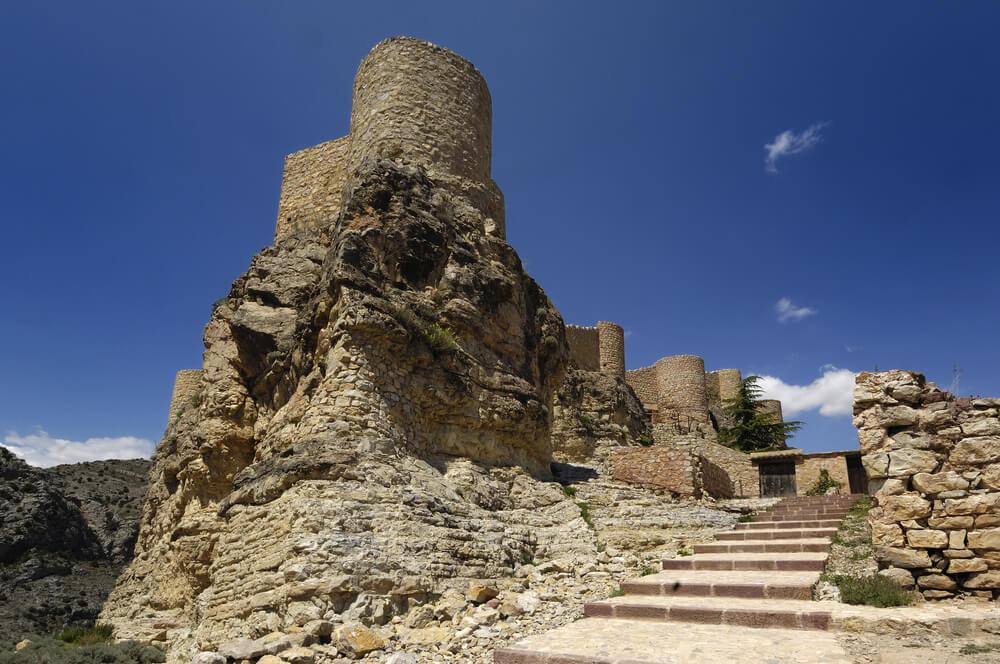
Another important historic structure worth mentioning is Castillo de Albarracín, built on the site of an ancient fortified settlement. Its archaeological remains help researchers explore the different stages of the town's development, particularly the period of Muslim rule.
The natural focal point of Albarracín's historic centre is Plaza Mayor. This small square is surrounded by traditional buildings, and its architectural ensemble creates one of the town's most characteristic views. Here stands the town hall, with its arcaded gallery and balconies overlooking the river valley. The square is also a convenient starting point for exploring the historic centre, as its narrow streets lead towards the main religious buildings and old neighbourhoods.
One of the most important landmarks is Catedral del Salvador. The present building took shape mainly during the 16th century, on the site of an earlier church. The cathedral stands next to the Bishop's Palace, which is also an important part of the historic ensemble. Inside, visitors can find examples of religious art, while the former palace buildings house the Diocesan Museum, whose collection of ecclesiastical objects includes some particularly notable Flemish tapestries. Another interesting building is Iglesia de Santa María, whose history is linked to the town's earlier stages of development. Iglesia de Santiago is also worth visiting and adds to Albarracín's religious heritage.
The town also preserves less obvious cultural treasures. The Municipal Museum introduces visitors to local history and archaeological discoveries, while the Toy Museum offers a glimpse into the everyday lives of previous generations through objects from their childhood. These smaller cultural spaces help visitors see Albarracín not merely as a historic backdrop but as a town with its own social and cultural memory.
Beyond the old town: nature and prehistoric art
Albarracín is interesting for more than just its architecture. The surrounding mountainous area preserves natural and archaeological landmarks that considerably broaden our understanding of the region's history.
One of the most fascinating places is Paisaje Protegido de los Pinares de Rodeno, a protected landscape known for its unusual red sandstone rock formations, pine forests and numerous rock shelters. The contrast between the red rocks, green trees and pale mountain trails creates a distinctive landscape characteristic of this part of Aragón.
However, it is the prehistoric rock paintings that give this area its true historical significance. Natural hollows in the rocks preserve images of animals, people and hunting scenes created by prehistoric inhabitants of these lands. They belong to Levantine rock art, which has been included on the UNESCO World Heritage List as part of the Rock Art of the Mediterranean Basin on the Iberian Peninsula. These images provide a glimpse into the lives of people who inhabited the region thousands of years before medieval Albarracín came into existence.
Another interesting landmark in the region is the Acueducto Romano de Albarracín a Cella. It was built to transport water between the two settlements. A considerable part of the structure passes through rocky massifs, where channels and tunnels carved into the stone have survived. The aqueduct demonstrates the high level of Roman engineering skill, which was no less impressive than that of builders in later centuries.
A town that keeps its traditions alive
Despite its popularity among travellers, Albarracín remains an inhabited town with its own calendar of festivals, customs and cultural events. Its main square still serves as a public gathering place for important local celebrations.
Among the local traditions, the May singing festival known as Los Mayos holds a special place. This ancient custom is associated with welcoming spring. During the celebrations, traditional songs fill the streets, drawing on deep roots in local culture. In this way, the community maintains its connection with the natural cycles and rural way of life.
The town also preserves traditions of religious processions, folk dancing and seasonal festivals. Plaza Mayor becomes a meeting place for residents, while the historic streets come alive with music and participants in local celebrations.
Fundación Santa María de Albarracín plays an important role in preserving the town's heritage. The organisation works to restore historic buildings, research cultural heritage and organise educational and cultural events. Thanks to initiatives like these, historic structures remain part of a living urban environment.
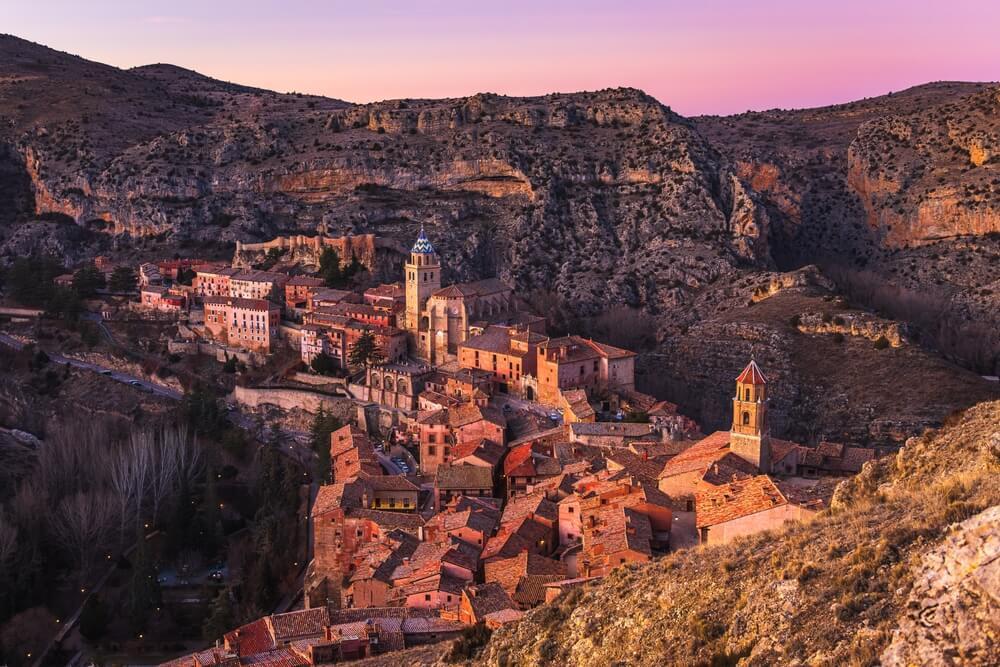
Albarracín's mountainous location has a noticeable influence on its climate. The town sits at an altitude of around 1,180 metres above sea level, so late autumn and winter are cooler here than in coastal areas. In November, temperatures gradually drop, nights become cold and the stone streets begin to feel the first signs of real winter in the morning.
During the colder months, Albarracín takes on a particularly special atmosphere. The reddish façades of its historic houses stand out against the overcast sky, while the narrow streets, stone stairways and medieval walls look even more striking without the summer tourist crowds. When the weather is favourable, a walk through the historic centre can be combined with a visit to the defensive fortifications and viewpoints overlooking the Guadalaviar Valley. Frost and snowfall are possible in winter, when snow-covered rooftops and red stone walls create unusual landscapes that are well worth seeing.


ABOUT Torodoro
FOR BUSINESS
FIND US ON SOCIAL

