


Valencia’s Historic Markets That Tell the Story of the City


Valencia’s history is revealed not only through its palaces, churches, and old streets. It is equally interesting to explore where residents bought their food, how urban trade developed, and why markets became major architectural projects in the early 20th century. Some of these commercial spaces are still operating today, preserving their original purpose or adapting to contemporary urban life.
Valencia’s historic markets offer a glimpse into different stages of the city’s development. A medieval marketplace, a covered Modernist market, and a former neighborhood market pavilion tell the story of how residents’ needs, urban infrastructure, and the very concept of public space have changed over time.
Central Market: Trade That Began in the Open Air
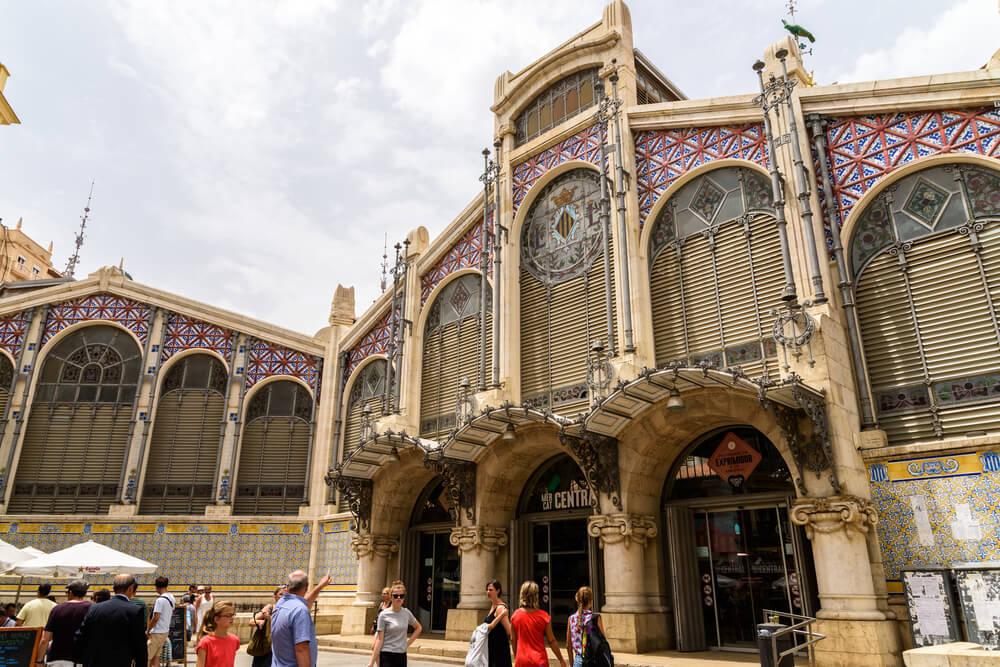
The Mercado Central is one of Valencia’s best-known commercial buildings, but its history began long before the current structure appeared. As far back as the Middle Ages, this part of the city regularly hosted an open-air market. Vendors displayed their goods on uncovered stalls, and the square gradually established itself as one of Valencia’s main trading hubs.
In 1839, the Nuevo market opened here. It already had a designated area for trading, but it remained an open-air market. By the late 19th century, it could no longer meet the needs of a growing city. A larger building was needed to bring numerous stalls together in a single location.
Construction of the current market began in the early 20th century. The project by architects Alejandro Soler March and Francisco Guardia Vial combined the functionality of a large commercial complex with the distinctive features of Valencian Modernism. The building was completed in 1928 and opened to shoppers on March 15 of that year.
Importantly, the architecture here serves more than an aesthetic purpose. The metal framework made it possible to cover a vast space, while glass provided natural light throughout the market halls. Ceramic decoration, colourful stained-glass windows, and ornamental details reflect the city’s connection to the agricultural traditions of the surrounding region.
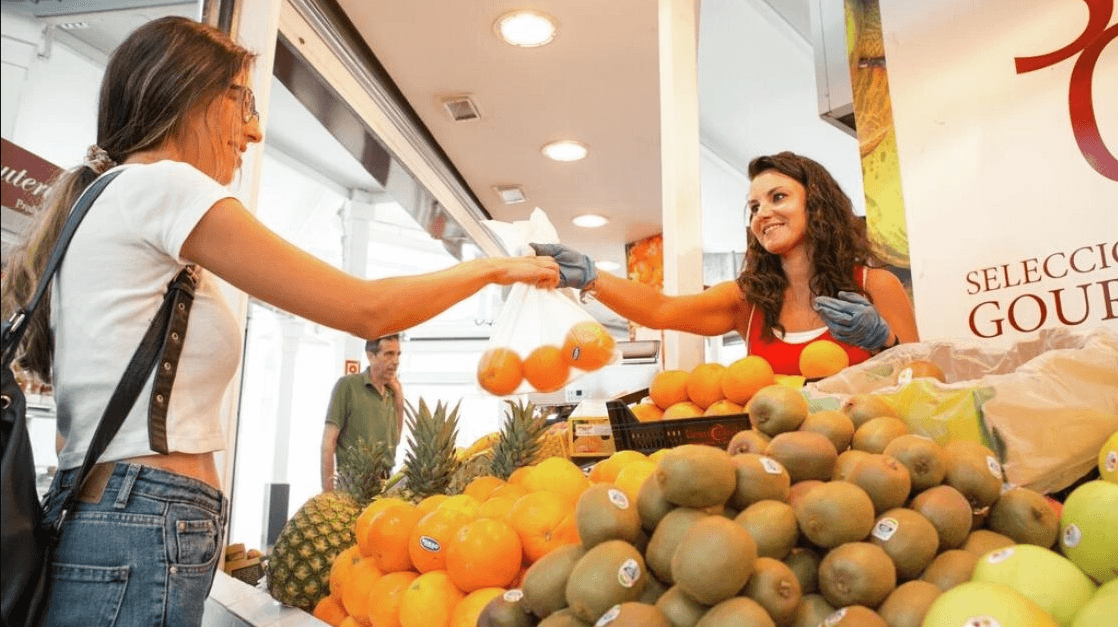
Today, the Central Market remains a place of everyday trade. Vendors sell vegetables, fruit, meat, fish, seafood, cheese, and other products. If you want to see the market at its busiest, visit in the morning. At the same time, remember that this is a working market, not a museum: vendors are serving customers, so it is important to photograph the stalls and people with respect for their work.
Colón Market: When Trade Became Part of Urban Architecture
In the early 20th century, Valencia began expanding beyond its historic centre. The new neighbourhoods of the Ensanche district were attracting more and more residents, many of whom found it inconvenient to travel to the Central Market for everyday shopping. This created a need for a separate commercial space serving this part of the city.
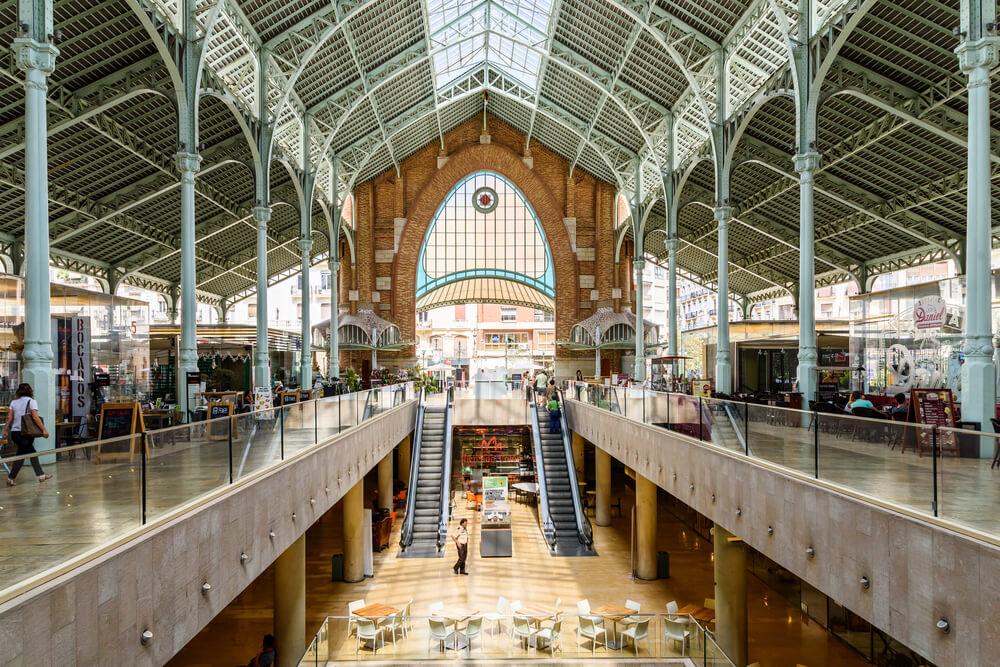
Mercado de Colón opened just before Christmas in 1916. Its design was created by architect Francisco Mora Berenguer, who drew inspiration from Modernist trends, particularly the work of Catalan architects. The result was an elongated pavilion featuring a metal framework, brick façades, stone details, and striking ceramic decoration.
Unlike the Central Market, which served a broad range of shoppers in the old part of the city, Colón Market was closely linked to the development of a new residential district. Its emergence shows how urban trade adapted to Valencia’s expansion and the needs of people living in its new neighbourhoods.
Over time, the building’s function changed. Following an extensive restoration completed in 2003, the market was transformed into a space with cafés, restaurants, and shops. Today, people come here not only to shop but also to meet friends, have breakfast, or take a break during a walk around the city.
This place is particularly interesting for anyone who wants to see how a historic building can remain part of an active urban environment even after its original purpose has changed. Visitors can admire the pavilion’s structure, decorative brickwork, and ceramic details, then stop for a coffee.
Mossén Sorell Market: Neighbourhood Trade in the Old Town
Mercado de Mossén Sorell is located in the Ciutat Vella district and stands out for its scale and character. It is a smaller commercial space whose history is closely tied to the development of a particular city square.
A Gothic palace belonging to Mossén Sorell once stood on this site. After a fire destroyed the building, the area was redeveloped, and by the late 19th century, the square had taken on a more orderly layout. In the late 1920s, a municipal market was built here to a design by municipal architect Ángel Romaní.
The building has an almost square floor plan. Inside, the market stalls are arranged around two passageways that intersect in the central area. This layout creates an intimate atmosphere designed to meet the everyday needs of the surrounding neighbourhoods.
In 1987, the market underwent renovation, during which some materials were replaced and the exterior enclosure was updated. Despite these changes, it retained its original purpose and continues to operate as a neighbourhood market.
Mossén Sorell is worth including in an itinerary for anyone interested not only in Valencia’s best-known landmarks but also in the everyday history of the city. Here, it is easier to see the market not as a standalone tourist attraction but as part of neighbourhood life. A visit can be combined with a walk through Ciutat Vella, although the main interest of this stop lies in the history of commercial infrastructure and its role in the local community.
Valencia’s historic markets represent three different models of urban trade. The Central Market grew out of the medieval tradition of open-air trading and developed into a large covered complex. Colón Market emerged in response to the needs of new neighbourhoods and later adapted to contemporary urban leisure. Mossén Sorell has retained the compact format of a neighbourhood market focused on residents’ everyday needs.
These changes reflect broader developments in Valencia’s history: population growth created a need for greater capacity and better-organised trade; the city’s expansion encouraged the emergence of new commercial hubs; and changing lifestyles eventually transformed some historic pavilions into public spaces serving a variety of purposes.
Even today, the markets remain closely connected to local gastronomy. They offer a chance to see which products continue to play an important role in Valencian cuisine and to better understand the importance of seasonality and local production in everyday eating.


ABOUT Torodoro
FOR BUSINESS
FIND US ON SOCIAL

