


Stone Streets and Castles: The Medieval Catalonia Worth Exploring


Catalonia is more than just the beaches of the Costa Brava, Barcelona's architecture, and vineyards stretching down picturesque hillsides. Deep in the region, among forested mountains, fertile valleys, and volcanic landscapes, lie small settlements where medieval history can still be felt in the layout of the streets, stone houses, and ancient bridges.
Once, these settlements were trading hubs, fortified towns, or centres of feudal estates. Today, they attract travellers looking to discover a different side of Catalonia: quieter, closer to nature, and full of local stories. Here are several places worth visiting to explore this part of the region.
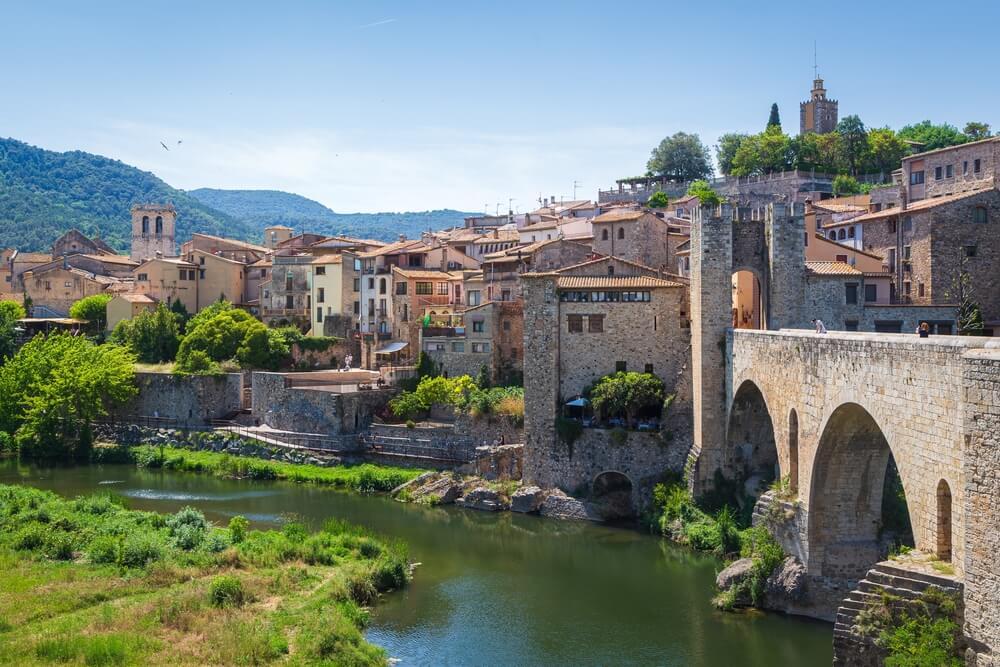
Besalú: The Bridge That Leads to the Middle Ages
Besalú is one of Catalonia's most distinctive historic towns. Located in the province of Girona, it was once the centre of an independent county that played an important role in the region's medieval history.
Besalú's most famous landmark is its ancient stone bridge over the Fluvià River. Its history dates back to the 11th century, although the structure was rebuilt several times due to floods and defensive needs. With its eight arches, distinctive angular shape, and fortified entrances, the bridge feels like a genuine gateway to another era.
Beyond the bridge lies the historic centre, with its narrow streets, Romanesque churches, and buildings that preserve traces of the town's former life. The Jewish Quarter deserves special attention, as it was once home to a Jewish community during the Middle Ages. The remains of a ritual bath, known as a mikveh, can still be found here. Used for religious purification, it is a rare historical site that offers a better understanding of medieval Catalonia's cultural diversity.
Besalú is worth visiting for more than its architecture. The town is also an excellent starting point for exploring the natural beauty of La Garrotxa, a region known for its volcanic landscapes, green valleys, and picturesque forests.
Rupit: Stone Houses Among Mountain Forests
Rupit lies in the mountainous Collsacabra area, surrounded by green forests, rocky cliffs, and valleys in the northern part of the Osona comarca. The settlement grew around a castle approximately a thousand years ago and now attracts travellers with its blend of medieval character and natural beauty.
The first encounter with Rupit begins at a suspension bridge over a stream. From here, it is easy to set off and explore the old part of the village, where narrow cobbled streets wind between stone houses and historic façades preserve the character of traditional Catalan architecture.
However, Rupit should not be mistaken for a medieval settlement that has remained unchanged. Many of its picturesque houses date from the 16th and 17th centuries. This combination of different historical periods is precisely what makes its architectural ensemble so interesting: the village reflects not only its medieval origins but also how the local community developed over the following centuries.
After exploring the historic centre, you can head into the surrounding countryside to enjoy mountain views and forest trails. Nearby routes lead to viewpoints and other natural landmarks in the region.
Rupit is particularly appealing to those who want to combine a cultural getaway with time in nature. You can take a leisurely morning stroll through its old streets and spend the afternoon exploring the surrounding landscapes.
Santa Pau: A Medieval Town Among Volcanoes
Santa Pau is another gem of La Garrotxa, where historic buildings blend harmoniously into an unusual natural landscape. The settlement developed around a castle belonging to a powerful feudal family, and its historic centre largely took on its present appearance during the first half of the 14th century.
At the heart of Santa Pau lies Plaça Major, also known as Firal dels Bous. Its distinctive triangular layout is surrounded by arcades that once housed market stalls. Markets and fairs played an important role in the life of the settlement, and Santa Pau was granted the right to hold them as early as 1297.
Nearby stands the castle around which the historic centre developed. Narrow streets, an irregular layout, and the remains of fortifications help visitors imagine how life was organised in a medieval town.
Santa Pau, however, is interesting for more than its architecture. It lies within the La Garrotxa Volcanic Zone, where visitors can see dormant volcanoes, lava formations, and forests that have grown on volcanic soils.
The local cuisine is also worth exploring. Santa Pau is famous for its namesake white beans, known as fesols de Santa Pau, which are grown in volcanic soils. This product has become an important part of the region's gastronomic identity.
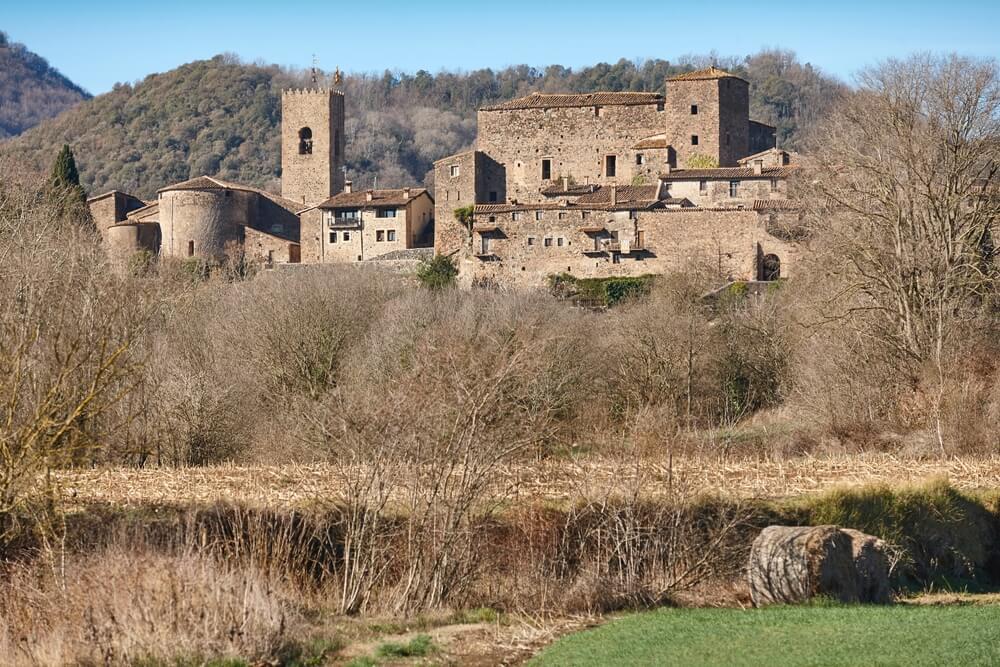
Guimerà: A Maze of Streets on a Hillside
Guimerà is a small settlement in western Catalonia that offers a particularly clear example of how the landscape influenced medieval urban planning.
The history of Guimerà is linked to a fortification built on a hill around the 11th century. Over time, the settlement expanded down the slope towards the valley of the Corb River. The differences in elevation shaped its unusual street layout: stairways climb the hillside, passageways run beneath arches, and houses stand at different levels.
Walking through the old centre feels like exploring a stone labyrinth. Look out for covered passages between buildings, ancient doorways, and narrow alleys where architectural details stand out against the rough stonework.
A round watchtower, a remnant of the medieval castle, rises above the village. Following structural reinforcement works, visitors can climb it to admire the surrounding valley. Another important landmark is the Church of Santa Maria, whose history dates back to the Middle Ages.
Unlike more popular tourist destinations, Guimerà allows visitors to focus on the settlement's architecture and distinctive layout. The appeal lies not simply in visiting individual landmarks but in tracing how streets, stairways, arches, and houses come together to form a unified historic ensemble.
Mura: Medieval Architecture Along Forest Trails
Mura is a small stone village located in Sant Llorenç del Munt i l'Obac Natural Park. Its historic centre has preserved traditional rural architecture, while the surrounding hills and forests make it an appealing destination for those seeking a quieter alternative to popular tourist towns.
Old houses with stone façades and tiled roofs, small squares, and narrow alleys define Mura's character. There is no need to put together a long list of landmarks: the pleasure lies in the walk itself, as you admire architectural details and discover cosy corners of the old centre.
One of the village's defining features is its close connection with the natural surroundings. Beyond the historic buildings, trails wind through the forests and rocky formations of the natural park. This makes it easy to combine an appreciation of traditional Catalan architecture with a walk in the fresh air.
Mura is also worth discovering for its local cuisine. One of the products associated with the village is Mura chickpeas, which are used in traditional dishes. After exploring the village, you can spend some time sampling the regional cuisine.
It is an excellent destination for a day trip from Barcelona, particularly for travellers who want to escape the city and spend a day among historic houses and natural landscapes.
Montblanc: Behind the Walls of a Medieval Town
Montblanc differs somewhat from the other places featured in this article: it is not a small village but a historic town. Nevertheless, its well-preserved fortifications and architectural heritage make it an important stop for anyone exploring medieval Catalonia.
Montblanc is famous for its town walls, which form one of the region's most striking medieval ensembles. They surround the historic centre, where towers, gateways, Gothic buildings, and churches representing different architectural styles have been preserved.
During your walk, it is worth visiting the Church of Santa Maria la Major, a Gothic church with a Baroque portal, as well as the Church of Sant Miquel, which combines Romanesque and Gothic elements. The historic centre is also home to former palaces that recall the town's administrative and economic importance in the past.
A particularly interesting time to visit is during the Medieval Week, traditionally held in the days leading up to Saint George's Day, known in Catalonia as Sant Jordi and celebrated on 23 April. During this period, the town hosts historical events, performances, and themed activities dedicated to medieval culture.
Montblanc is also easy to combine with visits to the surrounding wine-growing areas and the natural landscapes of the Prades Mountains. It can therefore form part of an itinerary that brings together history, gastronomy, and outdoor activities.
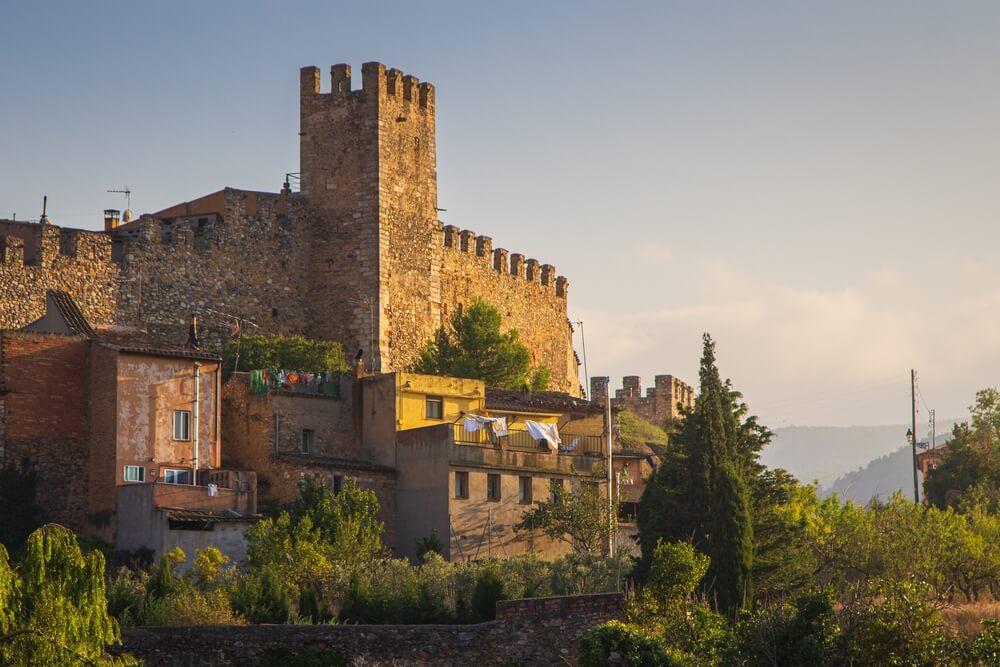
The medieval settlements of inland Catalonia appeal to visitors for more than the age of their buildings. They tell the story of a region where the natural terrain shaped street layouts, castles became centres of power, markets supported local economies, and different communities left their mark on the cultural heritage.
In Besalú, history comes alive beside the ancient bridge; in Rupit, stone houses blend harmoniously with mountain forests; and in Guimerà, the street layout itself turns a walk into an exploration of medieval urban planning. Santa Pau combines historic architecture with volcanic landscapes, Mura invites visitors to slow down and unwind, while Montblanc reveals the scale of urban life in centuries past.
These places are worth visiting not to tick off a list of landmarks but to experience Catalonia's diversity. Sometimes, a day spent far from the big cities, among old stone houses, forest trails, and local culinary traditions, becomes the most memorable part of a journey.


ABOUT Torodoro
FOR BUSINESS
FIND US ON SOCIAL
AVAILABLE LANGUAGES

