


Spend Hours Sitting? 5 Minutes of Stretching to Ease Muscle Tension


In today's world, we spend most of the day sitting down: working at a computer, studying, taking long car journeys… By the end of the day, we may experience neck stiffness, shoulder tension, lower back discomfort, and tired legs.
Taking short movement breaks regularly helps us change positions, reduce stiffness, and avoid staying still for several hours at a time. You don't need to go to the gym or set aside time for a full workout to achieve this. You can do a few gentle exercises next to your desk in just five minutes, without any equipment. The key is to move slowly, avoid sudden movements, and never try to stretch your muscles to the point of pain.
Neck and Shoulders: Relieve Tension After Working at a Computer
When we look at a monitor for a long time, we often unconsciously push our heads forward and raise our shoulders. This posture can contribute to muscle tension in the neck and upper back and may even lead to headaches.
Start with slow head turns. Sit upright, relax your shoulders, and gently turn your head to the right as far as feels comfortable. Hold the position for a few seconds, return to the starting position, and repeat on the other side. Do three to five repetitions on each side without tilting your head backward.
Next, move on to side bends. Slowly tilt your head towards your right shoulder without raising the shoulder itself. Feel a gentle stretch on the opposite side of your neck, hold for 10–15 seconds, and repeat on the other side. Don't pull your head with your hand: simply let its natural weight do the work.
Finish with small circular shoulder movements. Raise your shoulders towards your ears, gently roll them back, and lower them. Repeat five to ten times, then perform the same movement in the opposite direction. This simple exercise is easy to do even during a short break between tasks and can significantly reduce muscle tension.
Upper Back: Restore Mobility After Prolonged Sitting
Spending long periods at a desk often leads to a rounded back and shoulders that roll forward. To change your posture, it's helpful to focus on the thoracic spine.
Sit near the edge of your chair, place your feet flat on the floor, and straighten your back without excessively arching your lower back. Place your hands behind your head, spread your elbows out to the sides, and gently draw them backward as if opening up your chest. Hold for three to five seconds, then return to the starting position. Repeat five times without tilting your head backward or putting pressure on your neck.
Another simple exercise involves gentle torso twists. While sitting in your chair, cross your arms over your chest and slowly turn your shoulders to the right, keeping your pelvis facing forward. Don't try to twist as far as possible; a comfortable range of motion is enough. Hold for a few seconds, return to the centre, and repeat on the other side.
These movements help you vary your posture and maintain mobility in your upper back. You can do them several times a day, especially after long video calls or tasks that require you to keep your eyes almost constantly on the screen.
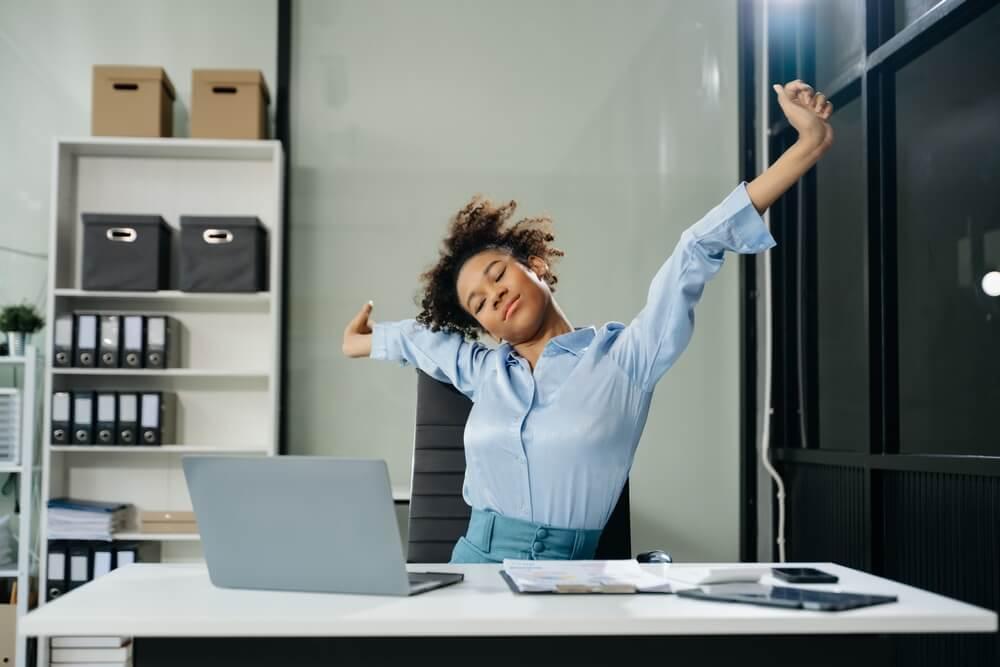
Lower Back and Pelvis: Time to Get Out of Your Chair
Sitting in the same position for a long time can leave your lower back feeling stiff and the muscles around your hips feeling tense. In this case, it's worth going beyond seated stretches and adding a little movement.
Stand up from your chair, place your feet about hip-width apart, and rest your hands on your thighs. Slowly push your hips backward, leaning your torso slightly forward while keeping your back straight. Then return to an upright position. Repeat five to eight times. Keep the movement smooth, without bending too deeply or straightening up abruptly.
To gently stretch the front of your thigh, you can use a desk or wall for support. Take a small step backward with one leg, slightly bend your front knee, and gently shift your body weight forward while keeping your torso upright. You should feel a light stretch at the front of the thigh of your back leg, closer to the hip. Hold for 15–20 seconds, then switch legs.
If there isn't enough space nearby or you cannot safely perform the exercise while standing, there's no need to look for complicated alternatives. Simply stand up, walk around the room for a little while, and change your position. Moving regularly is more important than completing every exercise in every circumstance.
Legs and Feet: Get Moving After Several Hours at Your Desk
During prolonged sitting, your legs remain almost motionless, and ankle mobility decreases. Short movement breaks help activate your muscles and joints without taking up much time.
Sit on a chair, keep your heels on the floor, and lift the front of both feet. Then, keeping the balls of your feet on the floor, raise your heels. Alternate between these movements 10–15 times at a relaxed pace. You can even do this exercise during a meeting without anyone noticing.
Next, try straightening your legs one at a time. Sit upright and slowly extend your right leg in front of you without locking your knee. Hold for a few seconds, then lower your foot. Repeat with your left leg. Do five repetitions with each leg.
If possible, walk down the corridor or step outside for some fresh air after these exercises. Even a short walk helps break up prolonged sitting. In the sunny, warm regions of Spain, where the weather is pleasant enough for part of the year to work with the windows open or spend time outdoors during the day, it's easy to combine this break with a short walk near your office or home.
A Five-Minute Break That's Easy to Fit Into Your Working Day
To make sure stretching doesn't remain just a good idea, try combining the exercises into a short routine. Spend the first minute turning and tilting your head and moving your shoulders. Use the next minute to open up your chest and twist your torso. Then stand up from your chair, perform a few gentle pelvic tilts, and lightly stretch the front of your thighs. Finish with the foot exercises and a short walk.
You don't have to complete the entire routine every time. If you only have a minute between meetings, you can stand up, roll your shoulders back, move your feet a few times, and walk around the room. If your work allows for a longer break, add the remaining movements.
It's helpful to link your breaks to familiar daily activities: finishing a video call, having a cup of coffee, taking your lunch break, or moving on to a new task. This makes it easier to change positions regularly without waiting until you start to feel noticeable discomfort.
At the same time, don't expect a few exercises to fully compensate for sitting for hours on end. Try to stand up more often, alternate your working positions, and find time to walk throughout the day. If you work from home, a short break could even mean walking to the next street. In an office, you could take the stairs to another floor, provided it's safe and appropriate.
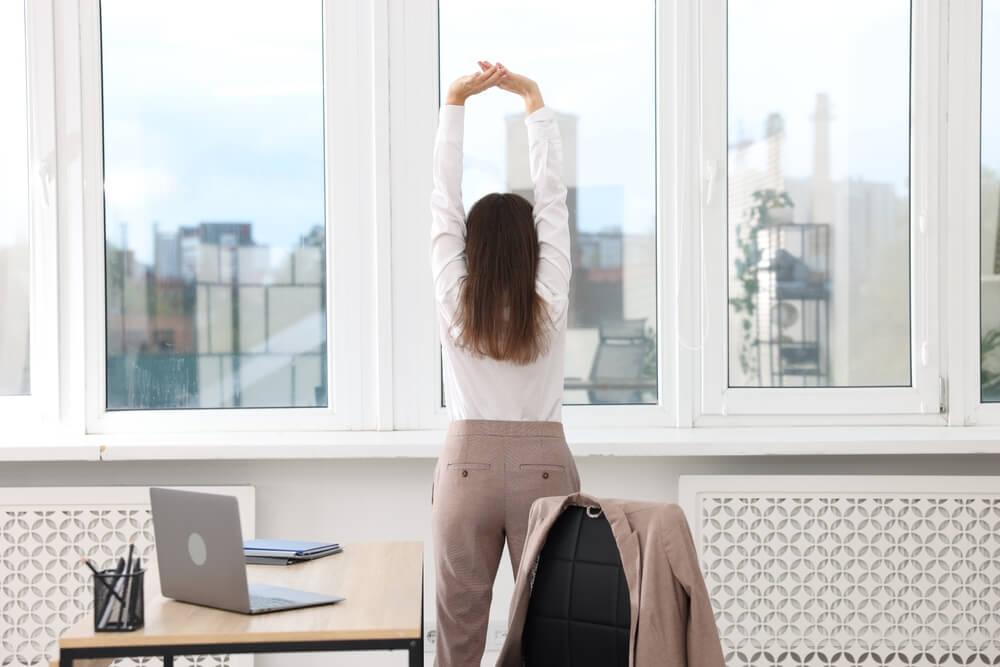
Pay attention to how your body feels during each exercise. A gentle stretching sensation is normal, but pain, numbness, tingling, or dizziness are reasons to stop moving immediately. Avoid bouncing, twisting your torso abruptly, or holding your breath. Move slowly, breathe naturally, and don't try to achieve the maximum range of motion.
If you have injuries, joint or spinal conditions, persistent pain, or other mobility limitations, it's worth consulting a healthcare professional to determine which exercises are suitable for you. Stretching can help reduce stiffness, but it does not replace diagnosis and treatment if discomfort recurs or gets worse.
Short movement breaks don't require special equipment or much effort. Start by incorporating a few simple movements into your working day, gradually turn them into a regular habit, and remember that the best posture during prolonged work is the one you change from time to time.


ABOUT Torodoro
FOR BUSINESS
FIND US ON SOCIAL
AVAILABLE LANGUAGES

