


Medieval Valencia: The Hidden History Still Alive in Its Streets


Valencia preserves traces of several historical periods, but the Middle Ages played a major role in shaping its modern historic centre. Behind the façades of old palaces, inside Gothic halls and beside ancient churches lies the story of a city that became one of the key commercial and political centres of the western Mediterranean.
After King James I conquered the city in 1238, Valencia became the capital of the Kingdom of Valencia within the Crown of Aragon. Over the following centuries, crafts, trade and urban institutions flourished, while the 15th century brought a period of particular economic and cultural prosperity.
Part of the medieval urban fabric did not survive subsequent redevelopment, but many landmarks have endured to this day. They tell us not only about the architectural styles of the past, but also about how the city made its living, governed itself, worshipped and interacted with other regions of the Mediterranean.
Valencia After the Conquest by James I
Until 1238, Valencia had been under Muslim rule for several centuries. The city had a well-developed irrigation system, thriving craft production, trade connections and its own urban infrastructure. James I's conquest transformed its political and religious structure, but it did not erase all traces of earlier periods.
After Christian rule was established, the city gradually underwent significant changes. Former mosques were converted into churches, new parishes were established, and land and houses passed into the hands of new owners. At the same time, some of the old urban structures continued to be used, as Valencia already had an established network of streets, commercial districts and water supply systems.
The Kingdom of Valencia became a distinct political and legal entity within the Crown of Aragon. It had its own laws, known as the Furs of Valencia, and institutions that regulated the life of the local community. It was not an independent state in the modern sense, but it did have its own legal tradition and representative bodies.
Over time, Valencia developed into an important centre of administration, craftsmanship and international trade. This role explains why the city has preserved such impressive public buildings as the Silk Exchange and the Palace of the Generalitat.
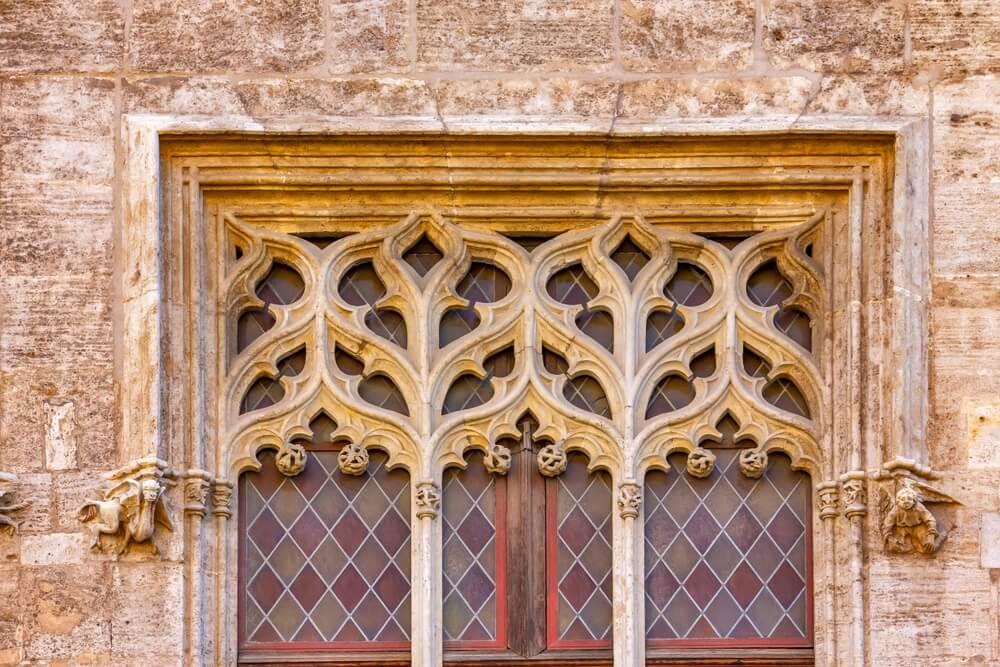
La Lonja de la Seda: When Trade Shaped the City's Identity
In the late 15th century, Valencia was experiencing a period of economic prosperity. Local merchants traded with other Mediterranean cities, craft workshops produced goods for domestic and international markets, and the city's financial institutions supported commercial activity. One of the most striking symbols of this development was La Lonja de la Seda, the Silk Exchange.
Construction of the complex began in 1482. It was designed as a place where merchants could negotiate agreements and conduct business in surroundings that reflected the city's economic importance. Despite its name, the exchange was not intended exclusively for the silk trade: a wide range of commercial transactions took place there.
The best-known part of the complex is the Contract Hall, or Sala de Contratación. Its tall, twisted columns support the vaulted ceiling, creating the impression of a space resembling a stone forest. The Gothic decoration not only demonstrated the builders' craftsmanship but also emphasised the prestige of the city's merchant community.
The complex also includes a tower, the Sea Consulate's chambers and an inner courtyard planted with orange trees. These features serve as a reminder that commercial life in medieval Valencia required more than markets. Institutions were also needed to settle trade disputes and organise the activities of merchants.
In 1996, La Lonja de la Seda was added to the UNESCO World Heritage List. Today, it is one of the most important landmarks for understanding how economic success influenced the development of the medieval city.
The Cathedral: Several Historical Periods in One Building
Valencia Cathedral stands near Plaza de la Virgen and remains one of the city's main historical landmarks. Construction began in the 13th century, shortly after James I conquered Valencia, on the site of the former main mosque.
The cathedral was built and remodelled over several centuries, so its appearance combines different architectural styles. Gothic elements sit alongside a Romanesque doorway, while later Baroque additions reflect changing tastes and ecclesiastical traditions. This layering of styles is characteristic of many European churches whose histories span long periods.
One of the most prominent parts of the complex is the Miguelete bell tower, whose construction began in the late 14th century. Its silhouette has become an inseparable part of the skyline of old Valencia. Visitors can climb the stairs to the upper terrace, where they can enjoy views of the rooftops of the historic centre and the city's modern districts.
The cathedral is notable for more than its architecture. It houses numerous works of religious art, as well as a relic venerated by the Catholic Church as the Holy Chalice. The relic has its own history and traditions, along with ongoing debates about its origins, so it is worth considering separately from the history of the building itself.
Next to the cathedral lies Plaza de la Virgen, where public celebrations and religious events still take place today. The square shows how Valencia's historic core continues to serve a civic purpose rather than having become exclusively a tourist destination.
The Palace of the Generalitat: The Kingdom of Valencia's Own Institutions
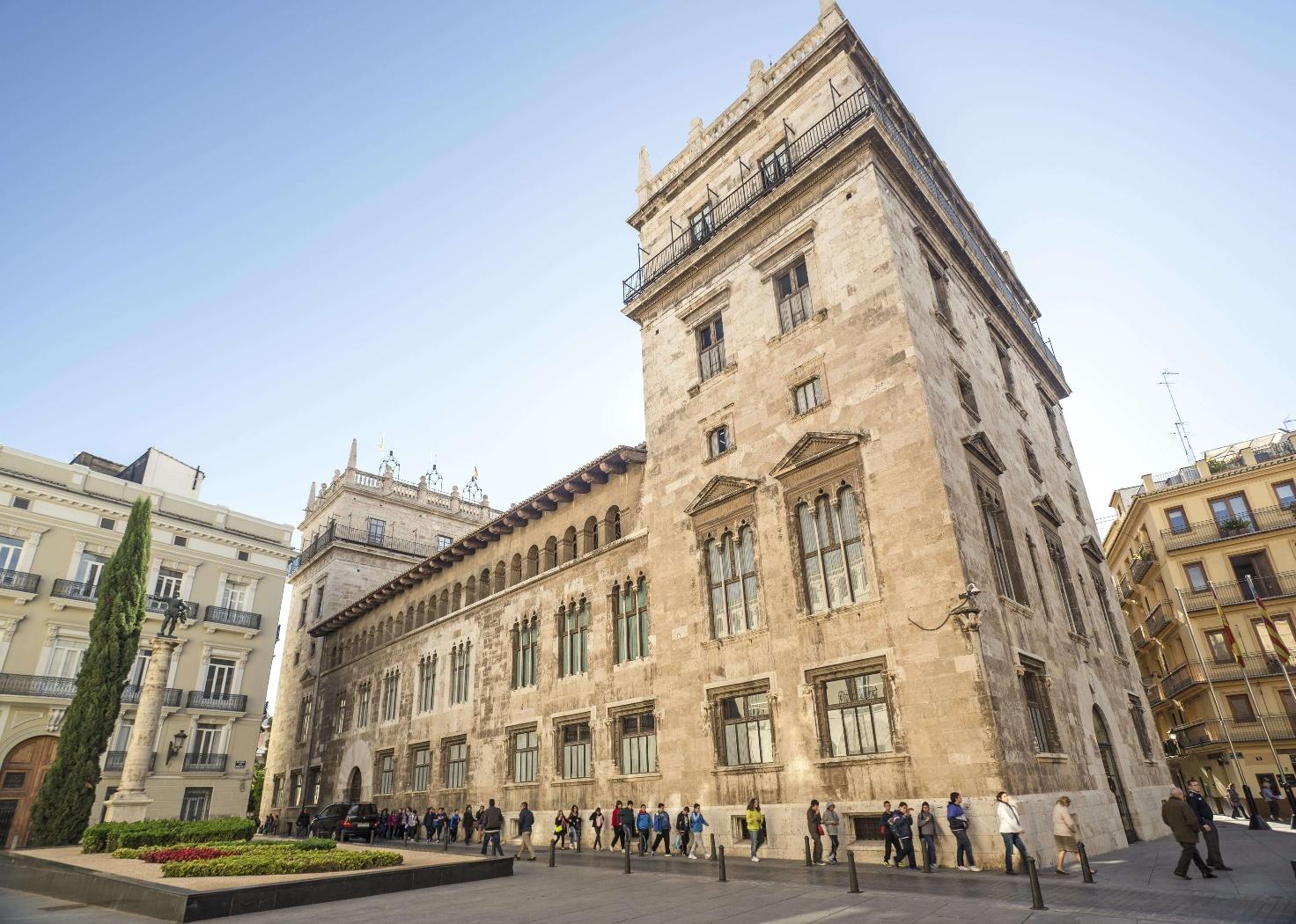
Medieval Valencia had not only commercial centres and religious buildings but also institutions through which the kingdom was governed. One of the most important surviving examples is the Palace of the Generalitat, a historic building associated with the work of the Kingdom of Valencia's representative body.
Construction of the palace began in the 15th century. Initially, it housed the offices of the Generalitat, which was developing into a representative institution for the kingdom and dealt, among other matters, with financial affairs. The building was expanded over time, so its architecture combines Gothic elements with later additions. The Kingdom of Valencia had its own mechanisms of government within the broader political structure of the Crown of Aragon. Local institutions represented the kingdom's interests and took part in resolving issues related to its finances and administration.
Today, the building houses the Generalitat Valenciana, the executive body of the autonomous community. It therefore remains not only a historic landmark but also part of the region's contemporary political life.
The palace is located in the old town, close to other medieval landmarks in Valencia. However, it continues to serve an official purpose, so access to its interiors depends on the visiting arrangements in place.
San Juan del Hospital: Religious Life and Archaeological Discoveries
The Church of San Juan del Hospital is a less obvious attraction for tourists, but it helps shed light on the early period of Christian Valencia. Its history is linked to the Order of the Knights Hospitaller of Saint John of Jerusalem, which established its base here after the conquest of the city.
Construction of the church began in the 13th century. Its architecture combines Romanesque and Gothic features, while the complex preserves traces of different periods in the city's history. Visitors can see the remains of a medieval cemetery and funerary structures that reveal the religious practices and beliefs of society at the time.
Of particular interest are the archaeological remains associated with the ancient Roman circus that once stood in Valencia, long before the Kingdom of Valencia was established. They serve as a reminder that the modern city developed through successive layers of history, and that medieval buildings often occupied spaces with a much older past.
Unlike the city's large, busy squares, the church grounds offer an opportunity to examine architectural details and archaeological remains at a more leisurely pace. It is an interesting stop for anyone who wants to discover not only Valencia's best-known landmarks but also places that reveal the history of everyday religious life.
The Portal de Valldigna and Traces of Valencia's Earlier Past
Not all of the city's historic heritage takes the form of monumental palaces or large churches. In the El Carmen neighbourhood, visitors can find the Portal de Valldigna, a small passageway associated with the former city wall.
It was part of an area that separated different sections of the old town. Nearby was a neighbourhood whose history is linked to Muslim Valencia and the changes that followed the Christian conquest. The portal is therefore interesting not only as a remnant of the old urban fabric but also as a reminder of the complex structure of the medieval city.
Valencia's history did not begin in 1238. The Christian kingdom inherited a city with older infrastructure, and its subsequent development unfolded against a backdrop of interaction between different cultures and traditions. These changes are not always visible in a single building, but they become apparent when you pay attention to the layout of the streets, the location of historic neighbourhoods and the archaeological remains.
A walk to the old city gates can be combined with an exploration of former defensive structures. Our separate article, “Valencia’s Forgotten Gates”, looks in more detail at the ancient gates that have survived and their history.
Valencia's Water: A Legacy That Goes Beyond Architecture
The history of medieval Valencia cannot be fully understood without considering water. Agriculture around the city depended on irrigation, and the network of canals and water distribution systems played a crucial role in the local economy long before the Christian kingdom was established.
After 1238, the new rulers inherited much of the irrigation infrastructure that had already been developed. It continued to be used and adapted to the needs of agricultural communities. Water made it possible to grow crops, supported the economic life of nearby settlements and became the subject of agreements and disputes between landowners.
One of the best-known examples of this tradition is the Tribunal de las Aguas de la Vega de Valencia, or the Water Tribunal of the Plain of Valencia. It settles disputes concerning the distribution of irrigation water among users of the traditional canals.
The tribunal meets every Thursday at noon beside the Apostles' Gate of the cathedral, provided the calendar allows. Cases are heard orally and according to established rules. This tradition demonstrates how local mechanisms for managing resources have survived changes in political eras.
In 2009, the Water Tribunal, together with a similar court in Murcia, was included on UNESCO's Representative List of the Intangible Cultural Heritage of Humanity. For visitors, it offers an opportunity to witness a living tradition that connects the history of agriculture, local self-government and the city.
The legacy of the Kingdom of Valencia is not limited to architectural landmarks. It can also be seen in the city's historic layout, traditions of water management, the work of long-established institutions and buildings that have adapted to new needs over the centuries.
La Lonja de la Seda recalls Valencia's commercial ambitions in the 15th century, the cathedral illustrates how religious and architectural traditions changed, and the Palace of the Generalitat connects modern regional institutions with the history of the kingdom. San Juan del Hospital and the Portal de Valldigna, in turn, reveal less familiar aspects of the city's past.
These places are interesting not only for those who travel specifically to explore history. They also help Valencia's residents look at familiar streets in a new light and understand how the city's character took shape. All it takes is stepping away from the usual tourist routes and paying attention to the details to discover, beneath modern Valencia, a city that has developed over centuries at the crossroads of cultures, trade and political traditions.


ABOUT Torodoro
FOR BUSINESS
FIND US ON SOCIAL
AVAILABLE LANGUAGES

