


Beyond Oviedo and Gijón: Discover the Hidden Side of Asturias


Asturias is often discovered through its two largest cities, Oviedo and Gijón. However, beyond their boundaries lies a region where mountain roads lead to small villages, old fishing ports preserve the memory of maritime traditions, and stone bridges, medieval streets, and historic rural buildings tell the story of the region just as vividly as museum exhibitions.
Travelling through Asturias beyond its urban centres reveals just how diverse this northern Spanish region is. Here, you can spend the morning among mountain peaks, stroll along the waterfront of a fishing town in the afternoon, and explore villages the next day where traditional architecture remains part of everyday life.
Mountain Villages Among Green Valleys
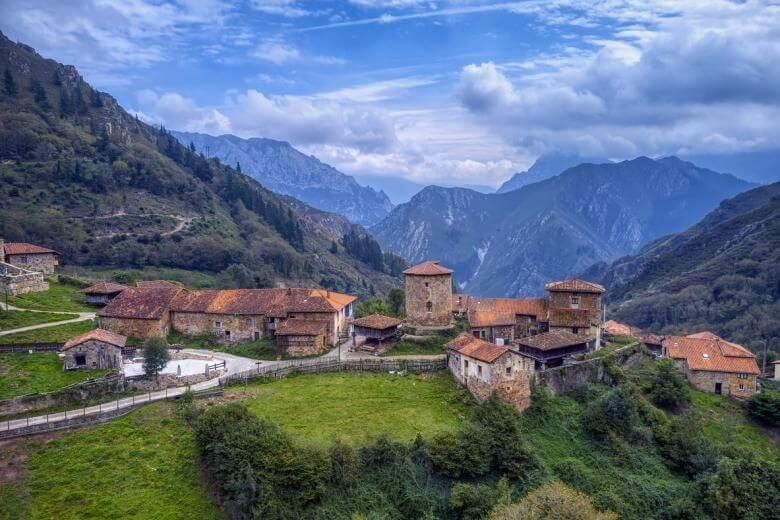
The mountainous areas of Asturias have been shaped by rugged terrain, isolated valleys, and the proximity of the Cantabrian Mountains. Many villages still feature stone houses, narrow streets, old farm buildings, and traditional granaries that recall the region’s agricultural past.
One of the most interesting places to discover the mountainous side of Asturias is Bulnes, a small village in the Picos de Europa mountain range. Nestled among steep slopes and green valleys, its stone houses blend harmoniously into the surrounding landscape. Traditionally isolated from the main transport routes, the village has retained the character of a mountain community whose way of life was closely tied to nature and livestock farming.
Bulnes attracts travellers who want to experience mountain scenery from within a small village rather than simply from viewpoints or along hiking routes. However, it is worth keeping the mountain conditions in mind when planning a visit: the weather can change quickly, and walking along the surrounding trails requires suitable footwear and preparation.
Another example of a traditional mountain settlement is Bandujo. It is known for its stone buildings, historic church, and surroundings that retain a distinct rural character. The layout of the village, the arrangement of its houses, and the views of the surrounding slopes offer an insight into how mountain communities in Asturias developed.
Those interested in traditional architecture should also visit Espinaréu. The village is famous for its numerous hórreos – raised granaries built on supporting pillars. These structures helped protect stored food from moisture and rodents and played an important role in traditional Asturian farming. In Espinaréu, they stand among residential houses, alongside rural roads, and in courtyards, making a visit an opportunity to explore an authentic historic setting.
Mountain villages are interesting for more than their architecture. They offer a chance to see how local people adapted to the terrain, made use of natural resources, and preserved traditions passed down through generations.
A Coastline Where the Fishing Past Is Still Present
The Asturian coastline stretches for approximately 400 kilometres and combines sandy beaches, rocky headlands, small coves, and fishing villages. The region’s maritime history is reflected in the layout of its towns, the architecture of its ports, and its local cuisine. In many places, fishing remains part of economic and cultural life, even as tourism has become increasingly important.
One of the best-known coastal settlements is Cudillero. Its colourful houses climb the hillsides around the harbour, forming a distinctive amphitheatre-like silhouette. Narrow streets lead from the port to the upper parts of the village, where visitors can enjoy views of the tiled rooftops and the sea.
Cudillero is worth visiting for more than just photographs. Local restaurants offer the chance to sample Asturian seafood, while a walk around the harbour helps visitors understand how life in a coastal community is organised. The terrain is quite steep, however, so it is worth allowing enough time for a leisurely stroll rather than limiting your visit to the waterfront.
East of Cudillero lies Lastres, a historic fishing town that descends along the hillside towards the sea. Its streets form a complex network of uphill and downhill routes, while the upper parts offer views of the coastline. Lastres is particularly interesting because its architecture is closely connected to maritime trade and fishing. Walking through the old town, visitors can see houses built over several centuries and gain a sense of the importance of the historic port to the local economy.
Another destination for exploring the coast is Luarca. The white façades of many of its houses, together with the harbour and the neighbourhoods perched on the hills, give the town a distinctive appearance. Its history is linked to fishing and seafaring, and a walk from the harbour to the viewpoints reveals how the settlement developed around a natural bay.
These coastal towns differ in size and layout, but they share one important characteristic: the sea is more than just a backdrop for a holiday. It has shaped the location of their ports, the nature of their local economies, and their culinary traditions.
Llanes: Medieval Streets Beside the Cantabrian Sea
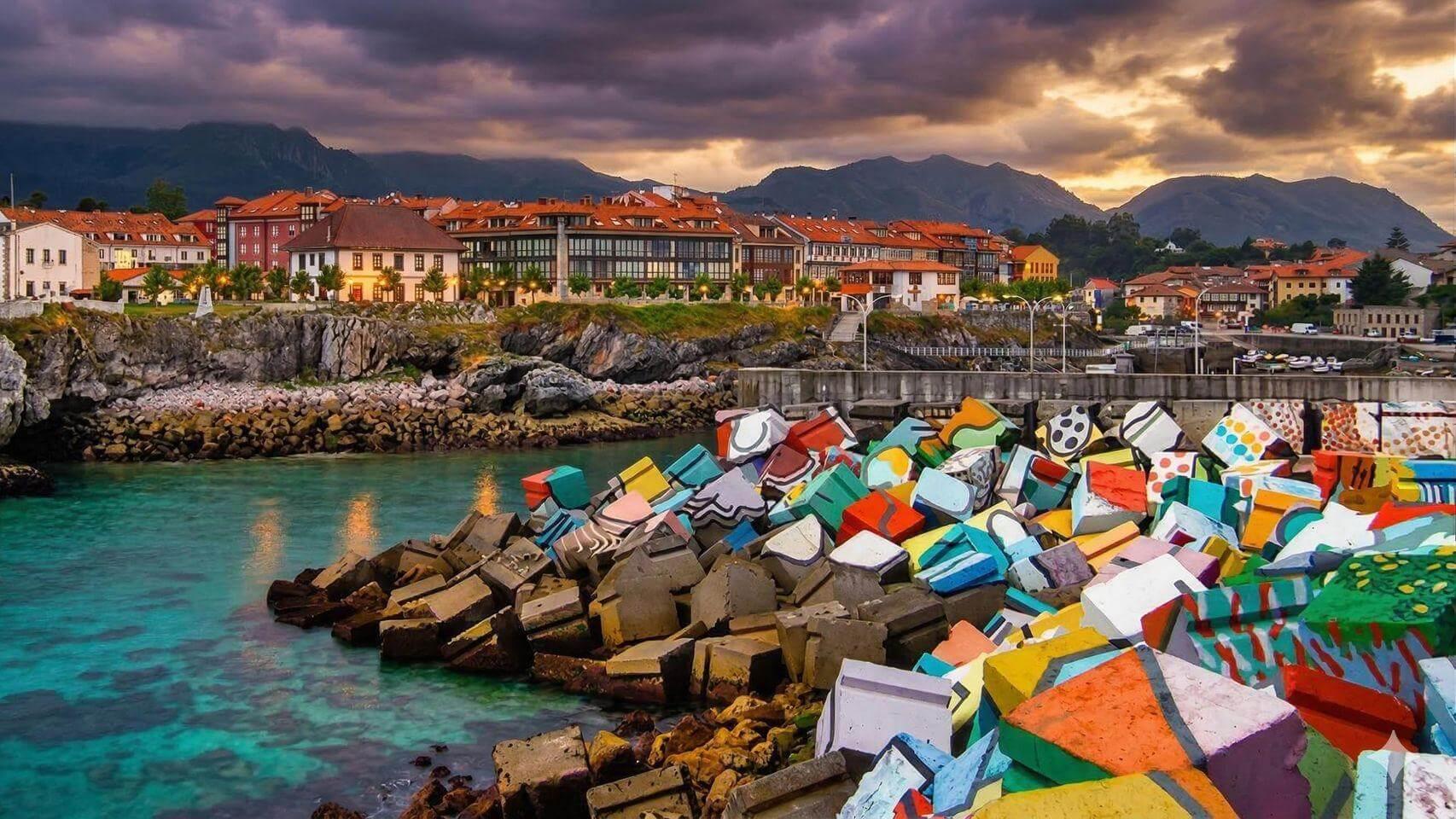
On the eastern coast of Asturias lies Llanes, a town where historic architecture combines with a harbour, coastal walking routes, and beaches. Its old town has been designated a historic-artistic site and preserves traces of its medieval development.
Among its most prominent landmarks are the remains of the 13th-century town walls, a defensive tower, and the Basilica of Santa María del Conceyu, whose construction began in the 12th century. The old streets lead towards the harbour, which was associated with fishing and whaling for centuries. Today, visitors can combine exploring the architecture with a walk by the water.
The Paseo de San Pedro promenade deserves special attention. The route runs along a grassy cliff edge and offers panoramic views of the town, the beaches, and the Cantabrian Sea. It is an excellent place for a walk, especially for those who want to admire the coastline from above without embarking on a long mountain hike.
Llanes is also known for its beaches, located close to the town centre. These include El Sablón, Torimbia, and Barro. Each has its own character, ranging from a convenient spot for a short break near town to natural surroundings with open views. This makes Llanes suitable both for a day trip and for a longer stay, allowing visitors to alternate cultural walks with time spent relaxing by the coast.
Colombres and the Legacy of Asturians Who Returned from the Americas
Asturias’s historic heritage is connected not only to the Middle Ages and traditional rural life. Emigration to the Americas also played an important role in shaping local architecture, particularly during the 19th and early 20th centuries.
Many Asturians crossed the Atlantic in search of work and better opportunities. Some managed to build their fortunes and returned to their homeland, where they constructed spacious houses, funded public institutions, and supported the development of their home villages. In Spain, these emigrants who returned from the Americas are known as indianos, and their residences have become a distinctive feature of the architectural landscape of the country’s northern regions.
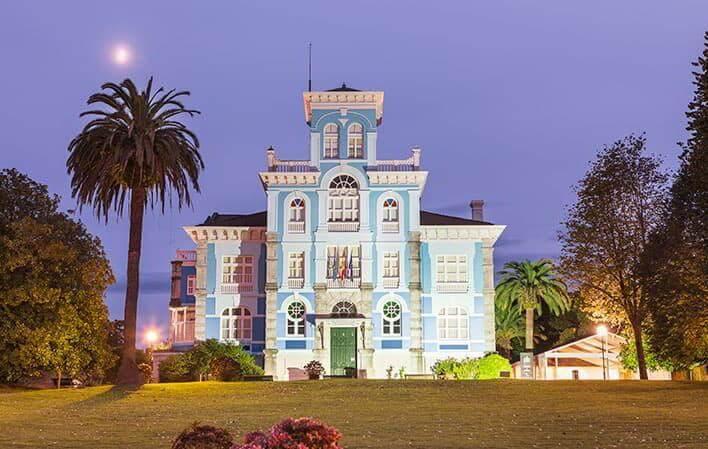
One of the most interesting places to discover this heritage is Colombres. The village features houses with decorative façades, spacious gardens, and architectural details reflecting the influence of styles popular across the Atlantic. Their appearance contrasts sharply with the traditional stone buildings found in mountain villages and fishing towns.
Colombres’s main landmark is Quinta Guadalupe. This impressive mansion is linked to the history of emigration and now houses the Museum of Emigration, managed by the Archivo de Indianos Foundation. The exhibition explores why Asturians left for the Americas, what their lives were like overseas, and the connections they maintained with their home communities.
A visit to Colombres helps reveal the personal stories behind the elegant façades: people who left their homeland because of economic hardship and later invested their earnings in its development. This heritage is a reminder that Asturias’s cultural connections extend far beyond the Iberian Peninsula.
The region’s diversity makes it possible to plan a route around your own interests. If mountains are the main attraction, it is worth spending time in Bulnes and the surrounding Picos de Europa area, while also visiting traditional settlements. For an introduction to fishing culture, Cudillero, Lastres, and Luarca are excellent choices, while Llanes is ideal for those who want to combine a historic town centre with beaches and coastal walks.
A car is often the most convenient way to travel between smaller settlements. It offers greater freedom when planning stops and makes it easier to visit remote villages, viewpoints, and beaches. However, some routes can also be reached by public transport, so it is worth checking connections between specific destinations before setting off. In mountainous areas, travellers should take narrow roads, steep gradients, and changeable weather into account.
It is equally important to leave time to discover the local cuisine. In coastal towns, look out for fresh fish and seafood, while mountain areas are known for their traditional cheeses, including Cabrales. Asturian gastronomy is closely linked to local produce, making food an important part of discovering the region rather than simply a break between sightseeing stops.
Asturias beyond Oviedo and Gijón reveals itself gradually, through roads winding between mountains and the sea, small harbours, rural houses, and landmarks that preserve traces of different historical periods. These are the places where you can see how the natural environment, traditional livelihoods, and historical events have shaped the region’s character. Both for residents of Spain looking for new destinations for a short getaway and for travellers who want to explore the country’s north beyond its largest cities, these routes offer a chance to discover Asturias in all its diversity.


ABOUT Torodoro
FOR BUSINESS
FIND US ON SOCIAL
AVAILABLE LANGUAGES

